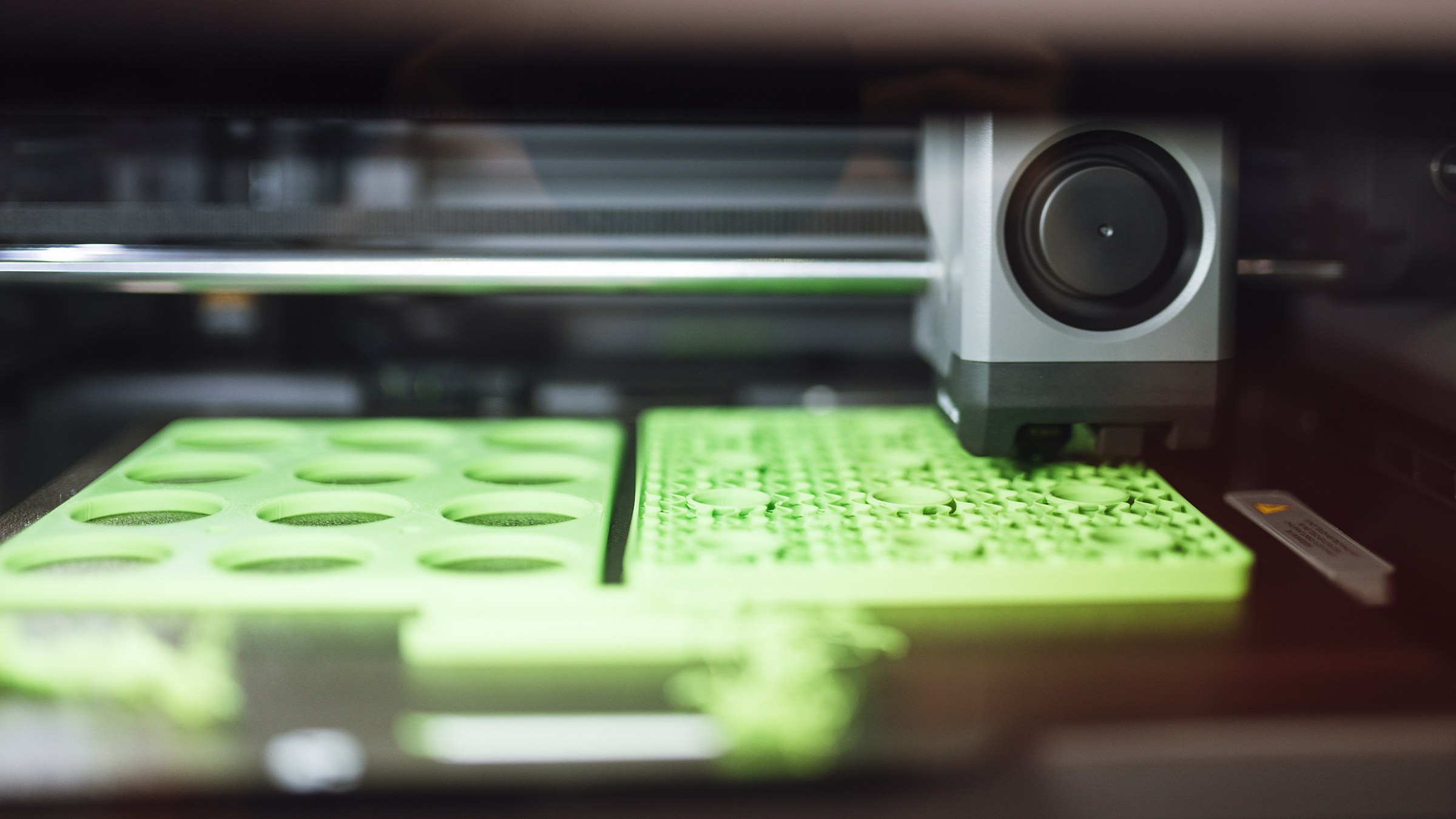
A prototype can look right, feel right and pass testing, yet still behave very differently once the production process begins.
One of the most common surprises at T1 is that the first moulded parts do not behave exactly like the prototype. The CAD model may be the same, the dimensions on the drawing may be the same and the product may even look almost identical. But the manufacturing process has changed, and that can change the part.
So when we choose between 3D printing, CNC machining and soft tooling, we do not ask which method is best. We ask what the prototype needs to tell us.
We are publishing the rest of this post on 11 January. Until then, these posts are ready to read now:
- The Real Cost of a Three-Month Production Delay
- Stop Selecting Injection Moulding Polymers Based on Piece Price Alone
- Where Is the Next Generation of Tool Designers Coming From?
A prototype is not necessarily a production simulation
Different prototype methods reproduce different aspects of the final product. Each one answers some questions well and leaves others open.
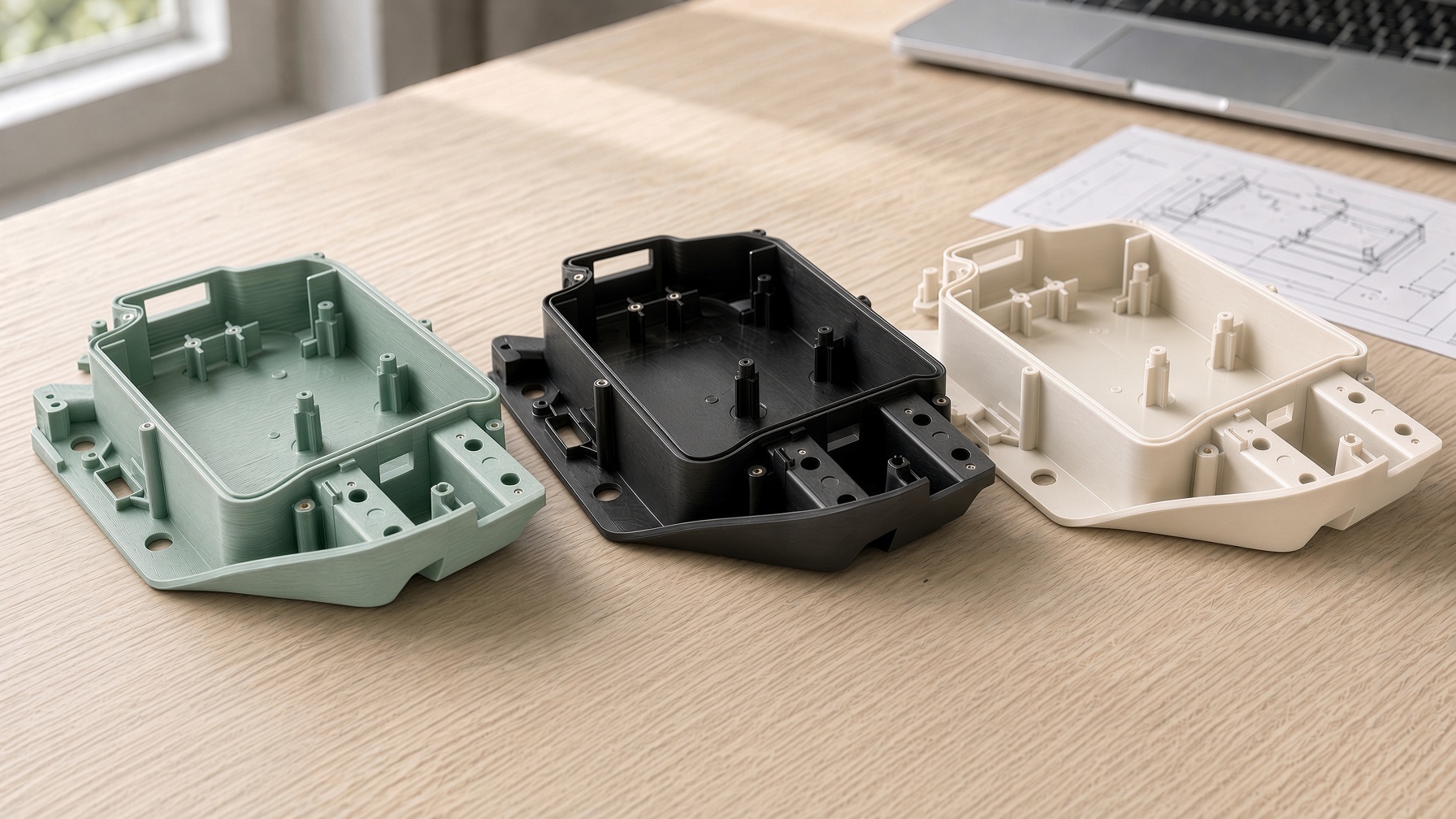
The product may even look almost identical, but the manufacturing process has changed, and that can change the part.
| 3D printing (SLA or resin) | CNC machining | Soft tooling | |
|---|---|---|---|
| What it can tell you | Form, fit, appearance and ergonomics | Excellent dimensional accuracy and a good representation of the final geometry, machined dimensions and mechanical interfaces | How the part behaves moulded in the intended material and process |
| What it cannot tell you | The mechanical behaviour, shrinkage or surface characteristics of the production polymer | How the injection moulded grade will behave, including shrinkage, warpage and moulded surface | Differences the production tool may still introduce through cavity pressure, cooling, gating and cycle time |
| Use it for | Early form and ergonomic checks | Interfaces, fit and dimensional checks | Production material behaviour before the production tool |
The question we ask is not “Does the prototype look like the production part?” It is “Which characteristics of the final product does this prototype actually represent?”
Material can make a big difference
We watch this most closely with engineering plastics. A prototype may be machined from a readily available engineering plastic because it is easy to obtain and machine. The production component might then be moulded from a specific grade selected for strength, stiffness, impact resistance, temperature performance, chemical resistance or cost. Those materials can behave very differently.
Nylon is a good example. Its mechanical properties and dimensions can change as it absorbs moisture, so a CNC-machined nylon prototype and an injection moulded nylon component may behave differently, even if they are both described simply as “PA66”. Glass-filled materials introduce another variable. The fibres can affect stiffness, shrinkage, warpage and dimensional behaviour depending on their orientation within the moulded part.
So the material name on the drawing is not always enough. The specific production grade matters, which is why we make the material decision first. Our guide to choosing between CNC machining, die casting and injection moulding sets out that material-first order, and our article on selecting injection moulding polymers covers the grades in more detail.
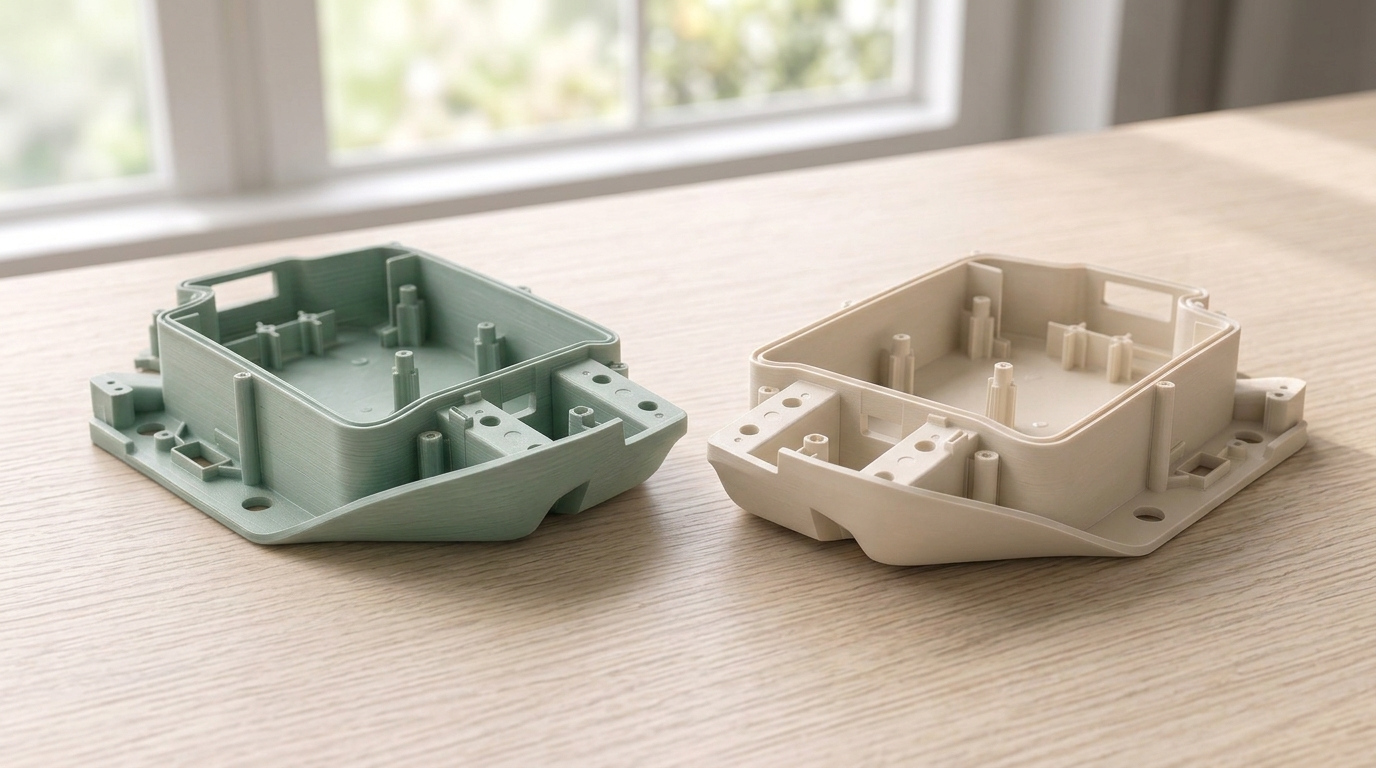
A prototype proves some things. The moulded part can still behave differently.
The moulding process changes the geometry
Injection moulding is not simply a case of filling a cavity with plastic. The material is heated, injected under pressure, packed, cooled and ejected, and during that process it shrinks. How much it shrinks, and where, depends on the material, geometry and processing conditions.
Cooling is also rarely uniform across a component. Thicker sections can cool differently from thin sections, and different areas of the tool can experience different thermal conditions. This can result in:
- Shrinkage
- Warpage
- Sink marks
- Dimensional variation
- Changes in flatness
- Changes in fit or alignment
So we design the tool around how the material is expected to behave, rather than simply reproducing the CAD geometry at a 1:1 scale.
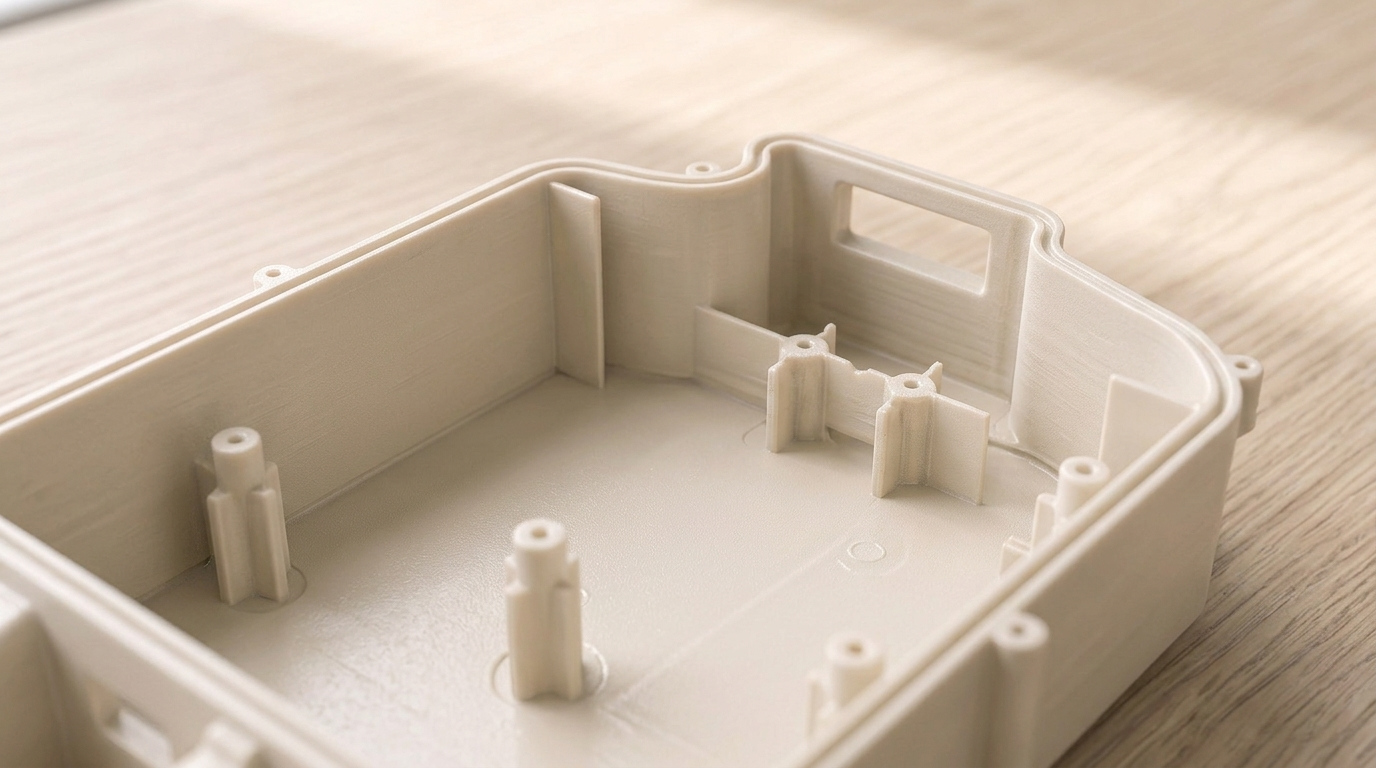
Thicker sections can cool differently from thin sections. The moulding process changes the geometry.
Fibre orientation can change the result
With glass-filled polymers, the relationship between the material and the moulding process becomes even more important. As the material flows through the cavity, the fibres can orient themselves along the flow direction, creating different mechanical properties and shrinkage behaviour in different directions.
The result may be a part that is dimensionally different from a simple prototype, particularly where the prototype did not replicate the production material and moulding process. That is why we treat gate location and flow direction as design decisions, not just tooling details.
Surface finish can be misleading
A prototype can also give you the wrong impression of the final appearance. A machined or printed surface may look very different from an injection moulded surface. The final result can be influenced by:
- Tool texture or polish
- Material grade and additives
- Fibre or filler content
- Gate location
- Flow behaviour
- Mould temperature
- Processing conditions
So a surface that looks perfect on a prototype still needs a proper review before the production tool is released. We are strictest about this on highly visible cosmetic components.
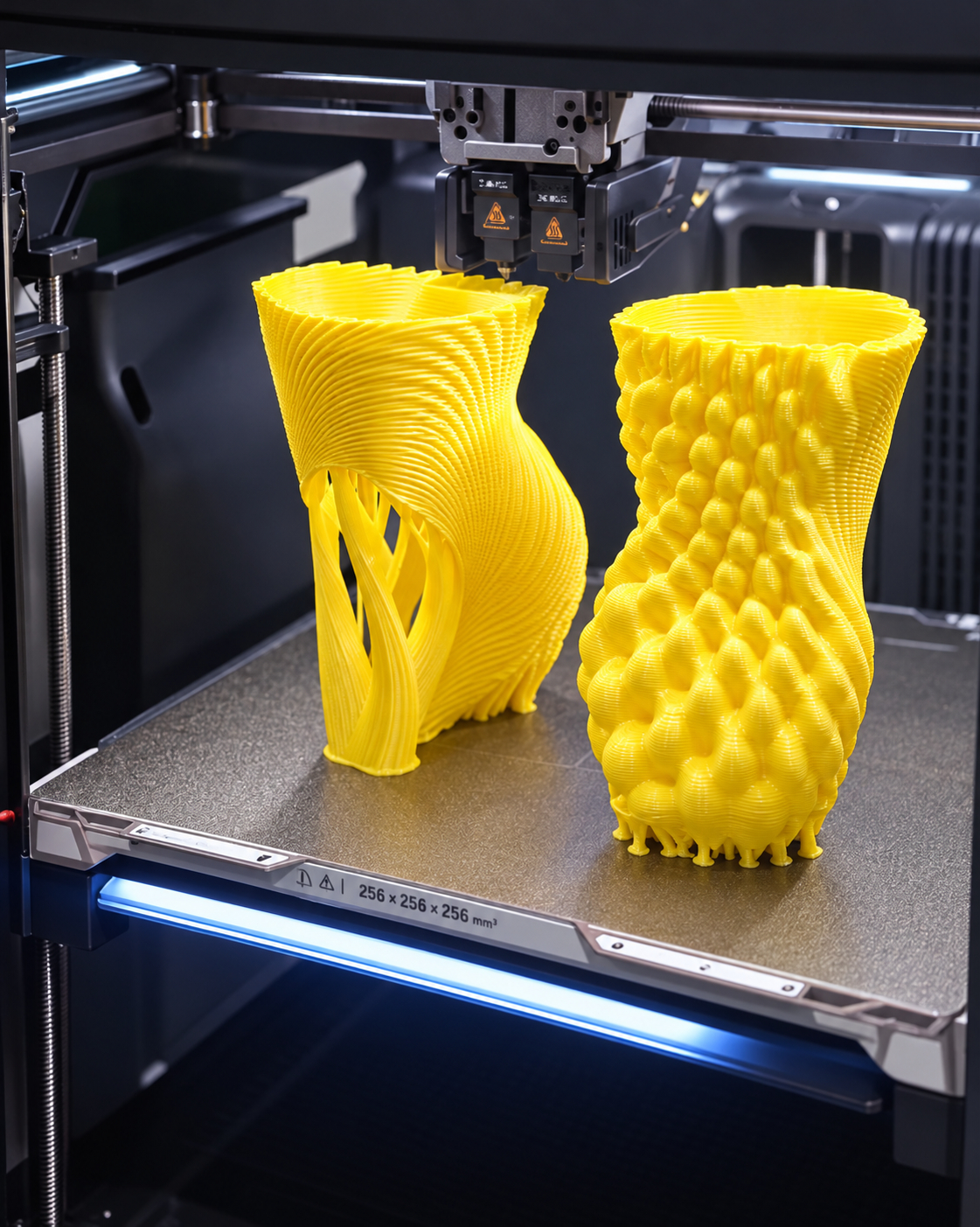
Every layer line shows on a print. A moulded surface takes its finish from the tool instead.
So what should you prototype?
It depends on what you are trying to learn. We start from the production material, then match the prototype method to the question that needs answering.
Material first, then the question. Each prototype method is the right answer to a different question.
If you need to check form and ergonomics, a 3D-printed prototype may be perfectly suitable.
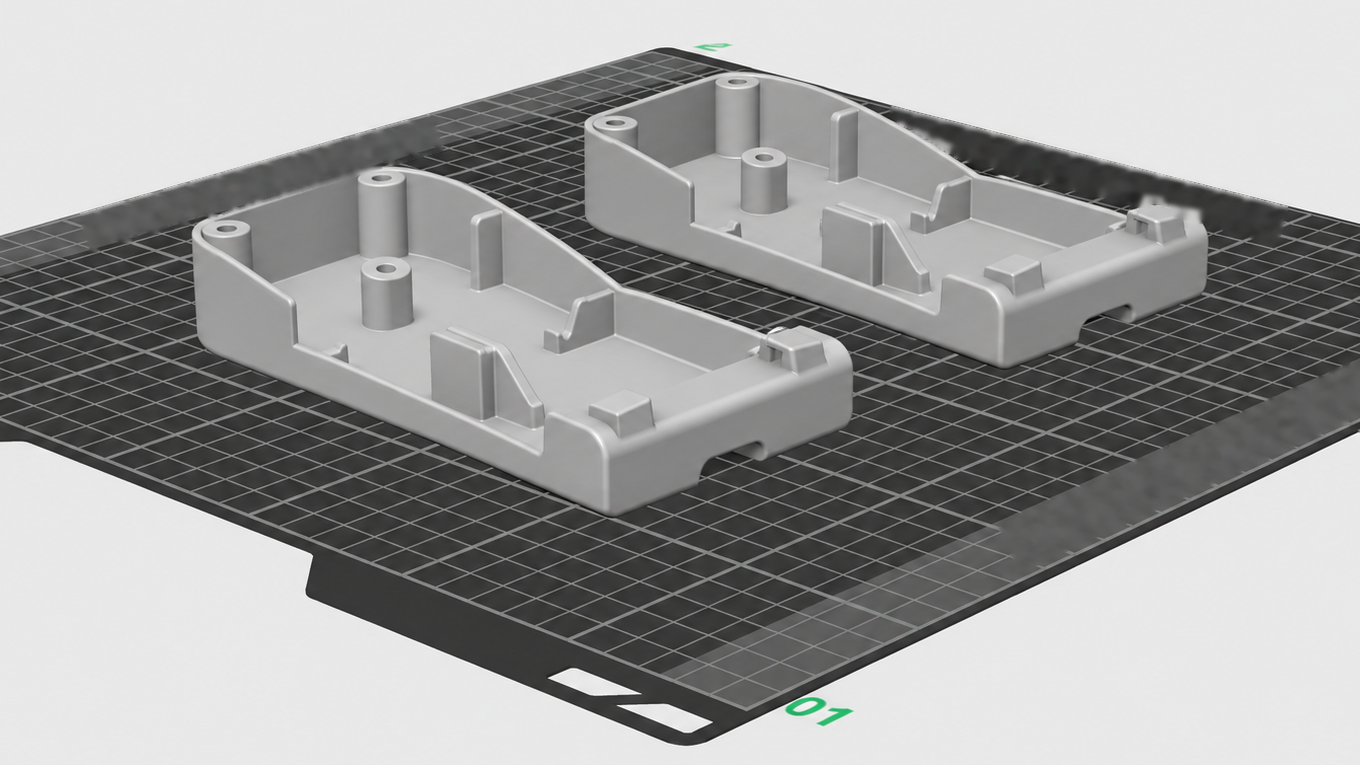
Two enclosure shells set out on the build plate. A print like this answers form and fit questions quickly.
If you need to check machined dimensions or mechanical interfaces, CNC may be more appropriate.
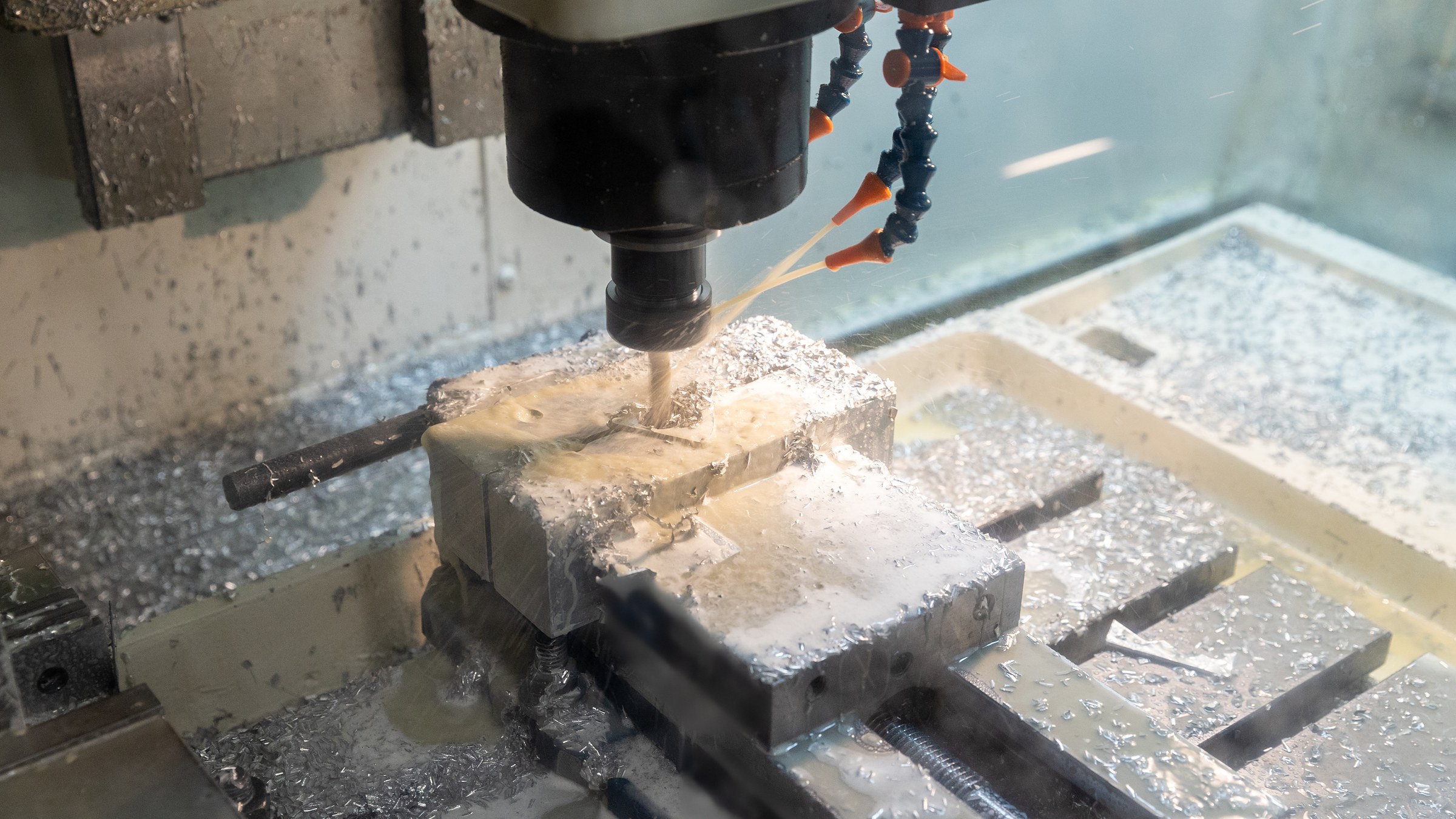
CNC machining from solid holds tight dimensions, but the block is not the moulded grade.
If you need to understand production material behaviour, soft tooling can provide much more useful information. For critical components, using the intended production material and manufacturing process as early as practical can reduce risk significantly.
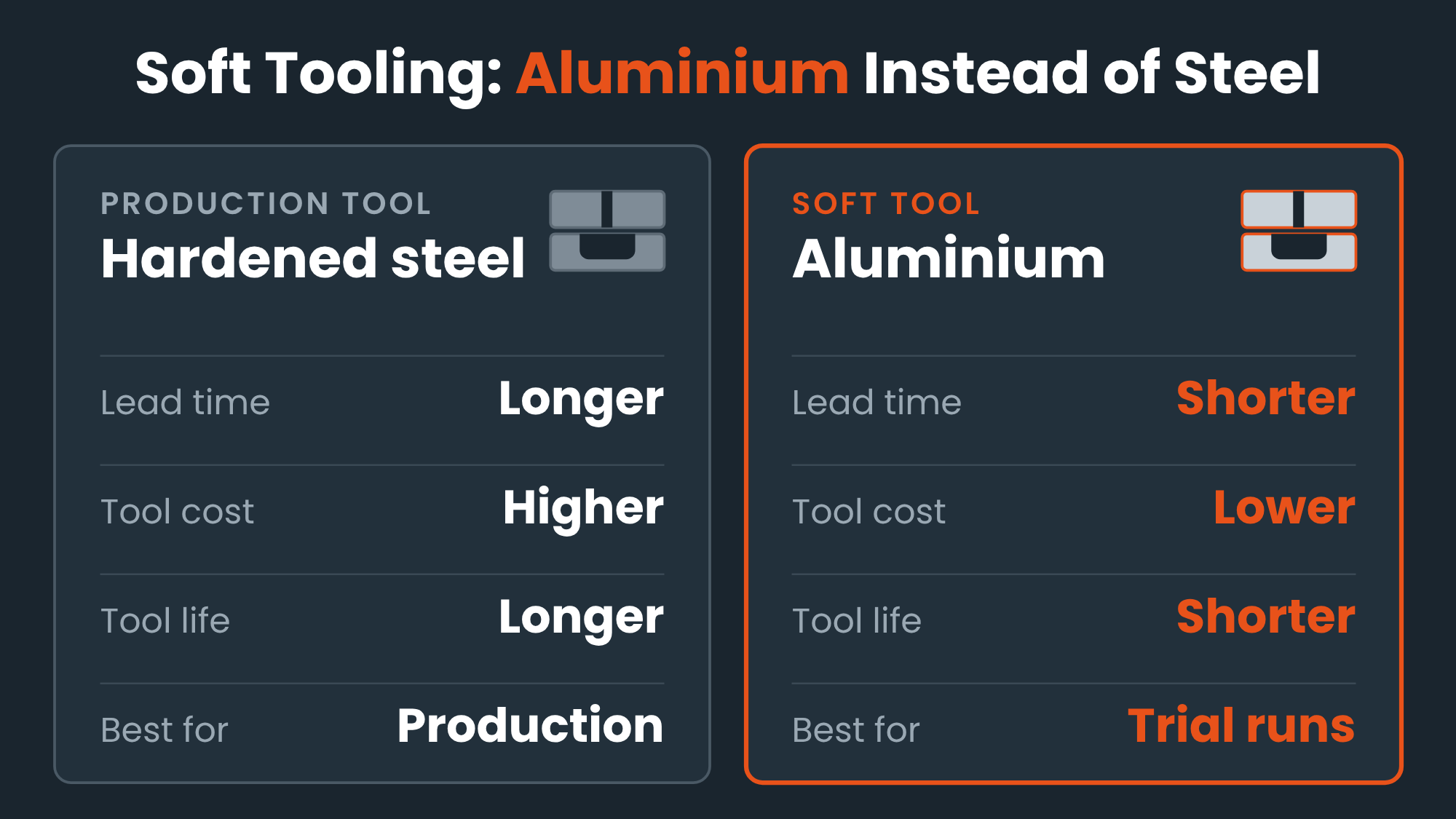
Soft tooling moulds the production material in an aluminium tool, before the hardened steel tool is committed.
Be clear about what you are trying to validate. A prototype is a tool for answering questions. It does not automatically answer every question about the final product.
Prototype early, but understand what it proves
We are firm believers in prototyping. The mistake is rarely the wrong prototype method. It is assuming one prototype proves everything.
- What does this prototype prove?
- What does it not prove?
- Which characteristics could change when we move to the production material and process?
Those questions bring risks to the surface while there is still time to deal with them. In our experience, the most expensive prototype is often the one that gives you confidence in something it was never capable of proving.