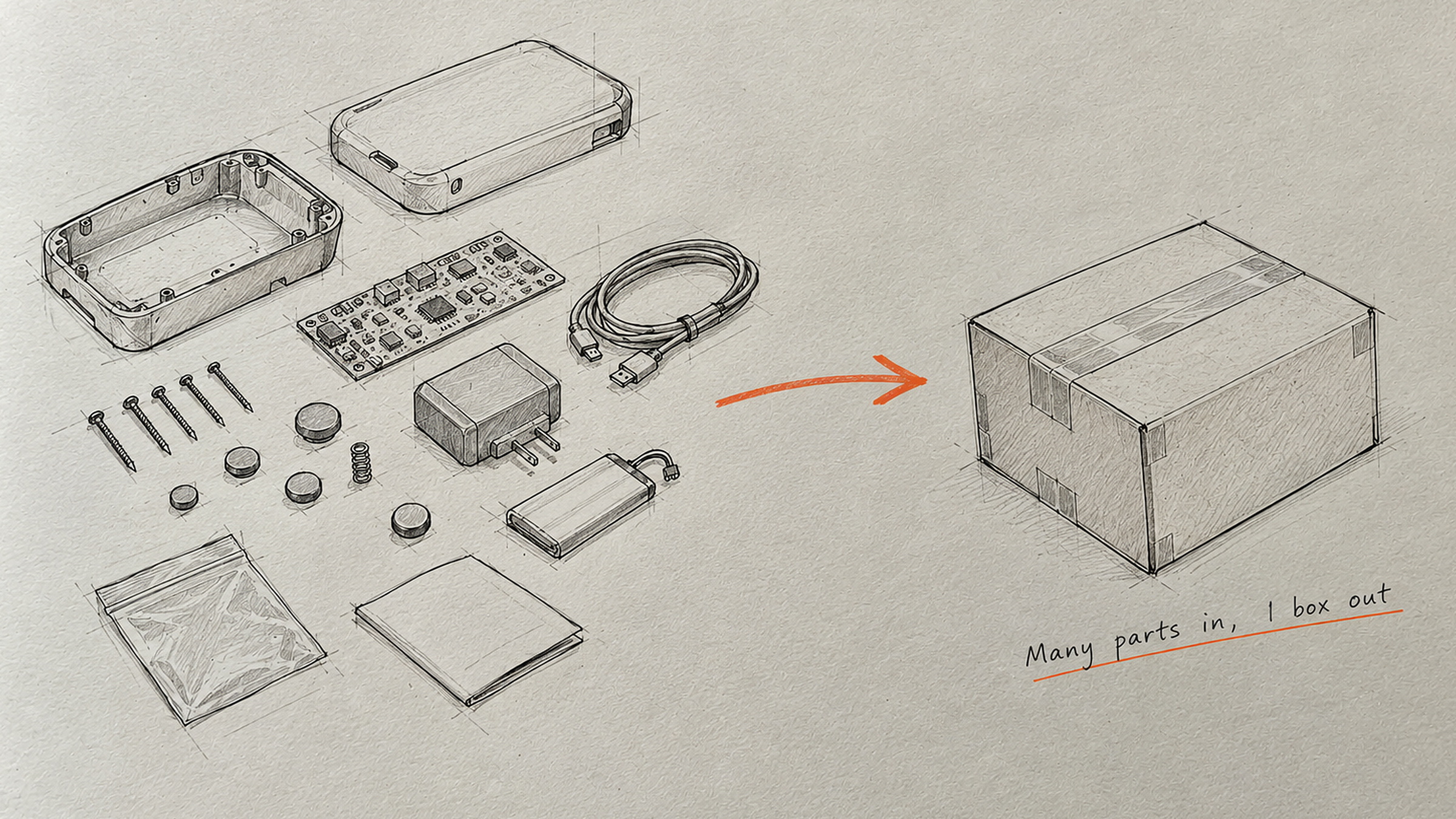
Buying components and delivering a finished product may look similar on a purchase order. They are very different manufacturing responsibilities.
Buying a set of components is relatively straightforward. You source each part, agree the price, place the purchase orders and arrange delivery. But a finished product requires all of those individual components to work together, arrive at the right time, meet the required quality standard and ultimately become a product that can be packed and shipped to the customer.
That difference is easy to underestimate, and it is the gap we check hardest on any BOM.
We are publishing the rest of this post on 8 February. Until then, these posts are ready to read now:
- The Real Cost of a Three-Month Production Delay
- Stop Selecting Injection Moulding Polymers Based on Piece Price Alone
- Where Is the Next Generation of Tool Designers Coming From?
Buying components is not the same as building a product
A multi-supplier BOM (bill of materials) can look very attractive on a spreadsheet. Each supplier has been selected, each component has a unit price and the landed cost looks competitive. What the spreadsheet does not show is how those components interact.
A clip may depend on the exact material grade and shrinkage of a moulded part. A cosmetic component may be produced by two suppliers using slightly different interpretations of the same finish. A fastener may arrive to one drawing revision while the component it needs to assemble with has already moved to another.
Each supplier may have delivered exactly what they were asked to deliver. The problem only appears when you try to put everything together.
Finished-in-box means owning the interfaces
Finished-in-box manufacturing means someone is accountable for the complete route from design and DFM (design for manufacture) through tooling, component manufacture, assembly, inspection and packing.
Finished-in-box is one route, not six separate purchases. The interfaces between the steps are where most problems start.
We treat the BOM as a system of connected parts, not a shopping list. That means resolving the important interfaces before production starts. Before we release a programme, we want to see that:
- Critical dimensions are clearly defined.
- The exact production material is confirmed.
- Cosmetic requirements are agreed.
- Assembly requirements are understood.
- Inspection methods are consistent.
- Supplier changes are controlled.
- T1 (first tool trial) and production approval criteria are clear.
- Non-conforming parts have a defined recovery process.
- Final assembly and packing requirements are agreed.
Our aim is to stop the assembly line becoming the place where all the unresolved manufacturing decisions finally meet.
The hidden cost of “we’ll assemble it ourselves”
We would never tell you not to keep final assembly in-house. There are plenty of good reasons to. It can provide greater control, protect IP, allow late configuration or simply make commercial sense for the business. But in-house assembly should not become a safety net for problems further upstream.
If the moulded components arrive with inconsistent dimensions, the assembly team may have to sort them. If cosmetic standards vary between suppliers, someone has to decide what is acceptable. If one component is missing, the finished product cannot be completed, and if a critical part is rejected, the assembly line may be left waiting for a replacement.
Your own team effectively becomes the buffer between the suppliers. That may give you control, but it also creates a significant internal workload that is rarely visible in the original component cost.
One accountable owner can change the equation
There is nothing wrong with using multiple suppliers. Often it is the right approach. What we focus on is what happens between those suppliers: who owns the interfaces, who keeps everyone on the correct revision, who coordinates quality, who manages the tooling, who deals with a failed batch, and who decides when one supplier’s solution creates a problem for another component.
| Buying components | Finished-in-box | |
|---|---|---|
| Who owns the interfaces | You do, between every supplier | One accountable owner for the complete route |
| Revision control | Each supplier works to the revision it was sent, and you keep them aligned | Controlled across every part by the same owner |
| Quality between suppliers | Each supplier checks its own part, and standards can differ | Inspection methods agreed and consistent across the BOM |
| A failed batch | You chase the recovery while the line waits | A defined recovery process for non-conforming parts |
| Assembly | Your team, often sorting and buffering upstream problems | Planned with the parts, sequence and torque agreed in advance |
| Final QC and packing | Your responsibility once the parts arrive | Part of the same route, to the agreed standard |
Without clear ownership, those decisions tend to surface when the programme is already under pressure. That is why we put one UK Technical Director in charge of every programme. It is also why a slightly more expensive supplier can be the better commercial option if they provide a more controlled route through development and production. The lowest component price does not necessarily produce the lowest total cost.
The final box is the real output
The customer does not receive your BOM. They receive a product. That means the manufacturing process does not finish when the individual components arrive. It finishes when the correct product is assembled, inspected and packed to the agreed standard.
- Correct component revisions
- Assembly sequence
- Torque requirements
- Functional checks
- Cosmetic inspection
- Labelling
- Serialisation
- Accessories and inserts
- Quantity per carton
- Packaging requirements
- Final quality checks
These can sound like small details next to tooling or component manufacture, but we check every one, because they are all part of delivering the product.
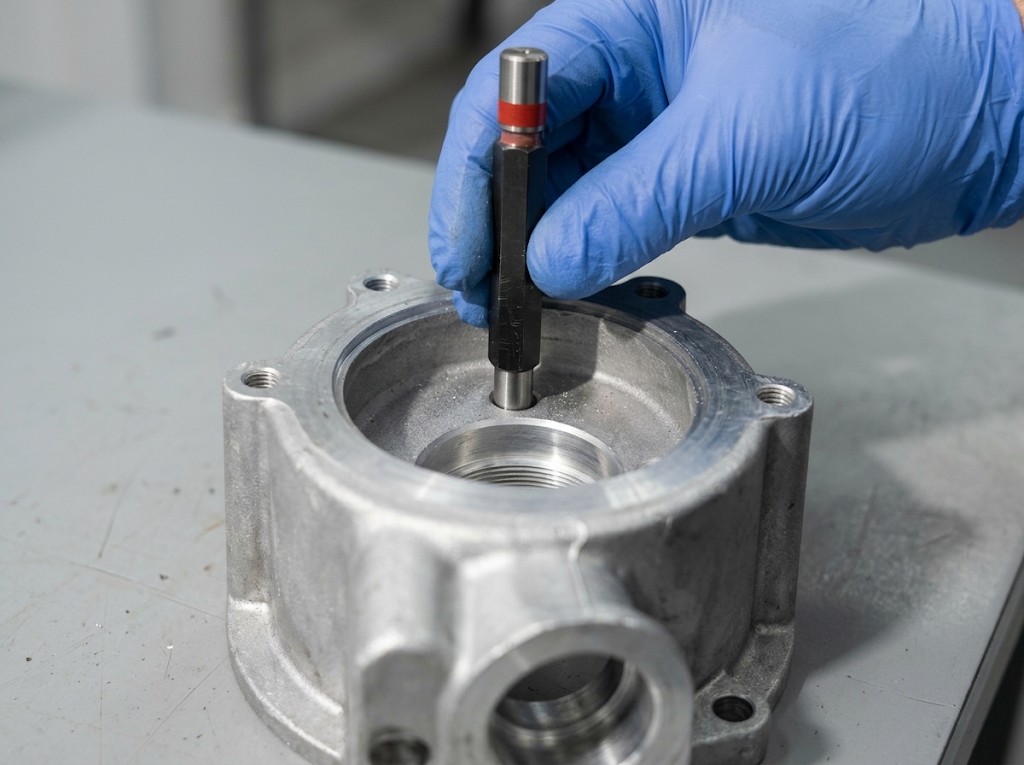
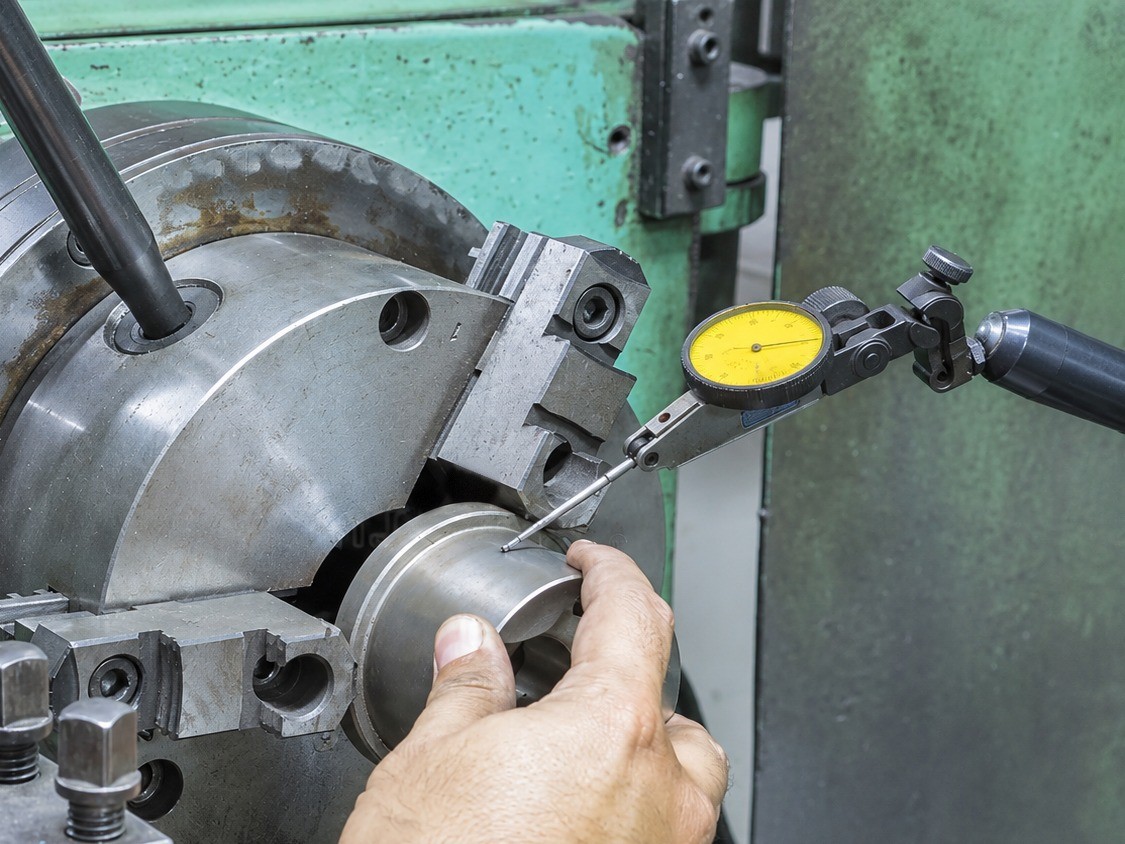
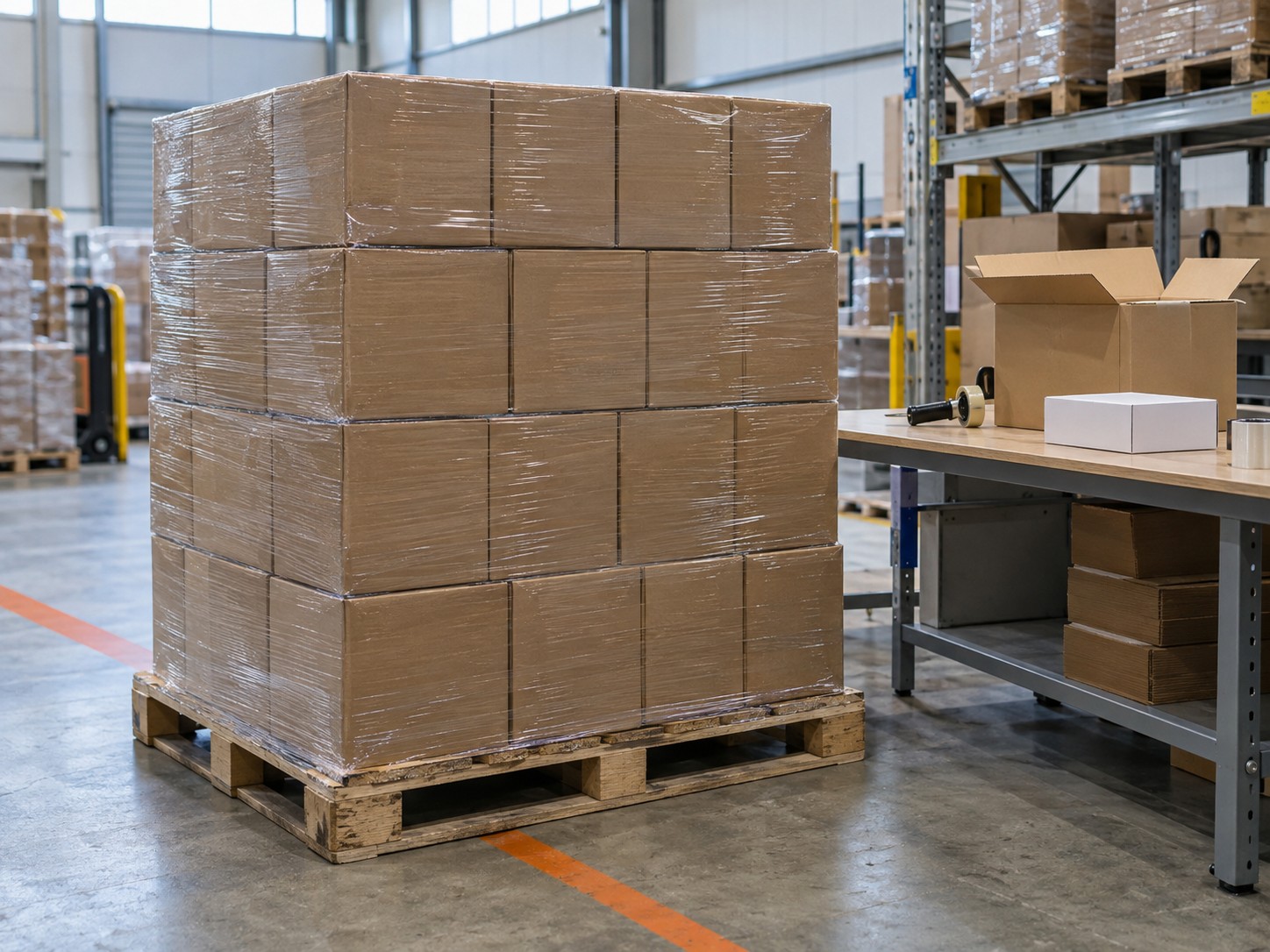
The finished-in-box sequence: multi-supplier interface fit check (1), dimensional check of a turned component before it ships (2), and final retail and master-carton pack-out, wrapped and palletised for dispatch (3).
Choose the manufacturing responsibility you actually need
Buying components is a perfectly good model if you have the internal engineering, quality, procurement and assembly capability to manage the interfaces.
But if what you need is a finished product ready to ship, buying a collection of components and expecting your business to integrate everything can create a lot of hidden work and risk.
So the question we ask is: are you buying parts, or are you buying a product? The purchase order may look similar. The responsibility is not.
At ProductiveDsign, we work across DFM, tooling, suppliers, quality, assembly and production to provide a route from product development through to finished, boxed product. Our job is not just to get every component delivered. It is to make sure those components become the product you intended to sell.