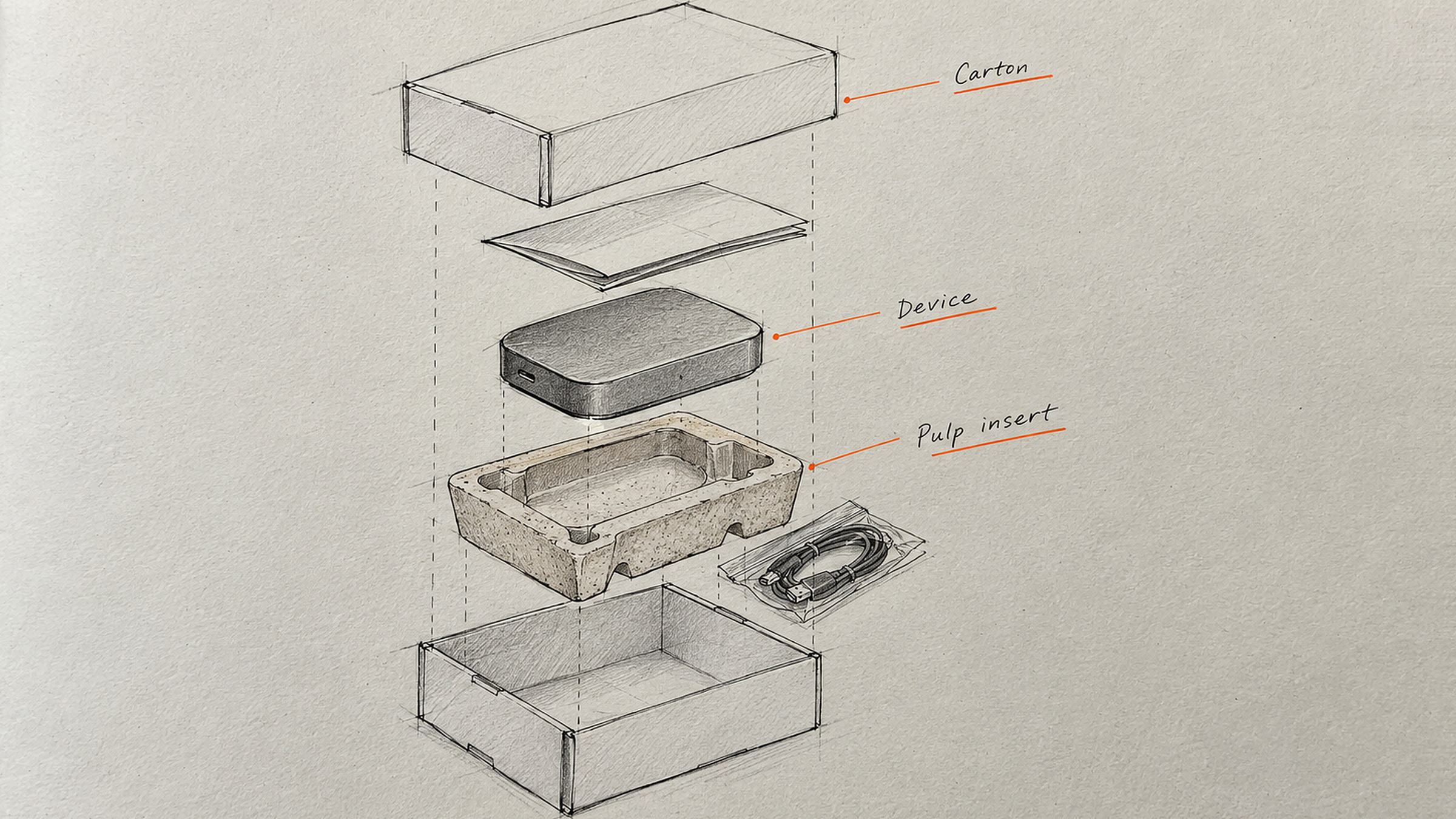
Packaging is the last part of the product we design, and the first part your customer touches. For high-value hardware it has two jobs: get the product there undamaged, and say nothing about sustainability that it cannot prove.
We treat the pack as a component, with its own specification, tests and sign-off. This is what we ask for, how we design a pack-out, and how we check a green claim before it goes anywhere near a printed box.
We are publishing the rest of this post on 16 November. Until then, these posts are ready to read now:
- The Real Cost of a Three-Month Production Delay
- Stop Selecting Injection Moulding Polymers Based on Piece Price Alone
- Where Is the Next Generation of Tool Designers Coming From?
Start with what damage really costs
The cheapest box is rarely the cheapest pack. A carton that saves a few pence per unit can cost far more if even a small share of units arrive scuffed, cracked or dead on arrival. Each damaged unit costs the product itself, freight both ways, returns handling and inspection. Harder to price is a customer whose first impression is a broken product.
So we compare packs on total cost, not unit price. For each option we ask three things: what it costs per unit, what damage rate the tests and early shipments point to, and what one damaged unit costs you once it has landed. On a robot arm, a sensor head or a handheld device with a glass display, a pack that costs more but keeps damage close to zero usually wins.
For electronics, protection also means ESD. Low-charging anti-static bags, often pink, limit charge building up on the bag. Metallised static-shielding bags go further and shield the contents from an outside discharge. We specify which one by part, not by habit, and mark it on the pack-out instruction so nobody has to guess.
How we design a pack-out
We design packaging in the same order as the product: what it has to protect against, then the material, then the detail. This is the sequence we follow.
We design the pack in the same order as the product: risks first, then materials, then the detail, and we keep adjusting once real shipments start.
The journey matters as much as the product. A unit sent through a parcel network gets dropped, tipped and stacked by people and conveyors. A unit on a wrapped pallet sees more vibration and compression, but fewer drops. Export adds humidity and weeks in a container. We design for the roughest leg of the trip, not the average one.
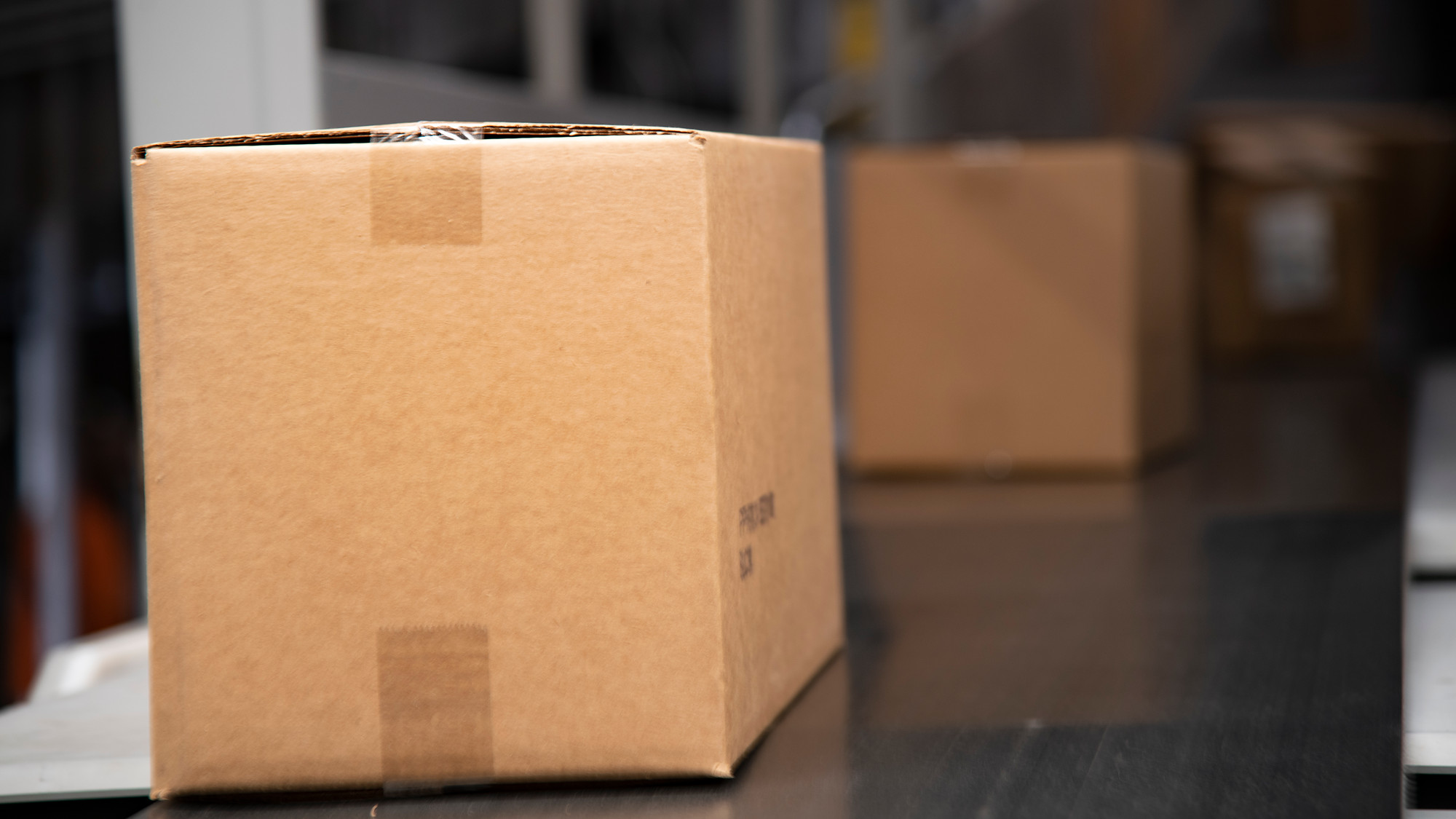
In a parcel network every carton is dropped, tipped and pushed along conveyors. We design the pack for that trip.
We then test sample packs against a recognised transit test, such as the ISTA series of procedures, before we sign anything off. The output is a pack-out specification: materials, dimensions, insert drawings, bag type, labels, quantity per carton and cartons per pallet. Alongside it sits a work instruction with photos, so every packer builds the same pack on every shift.
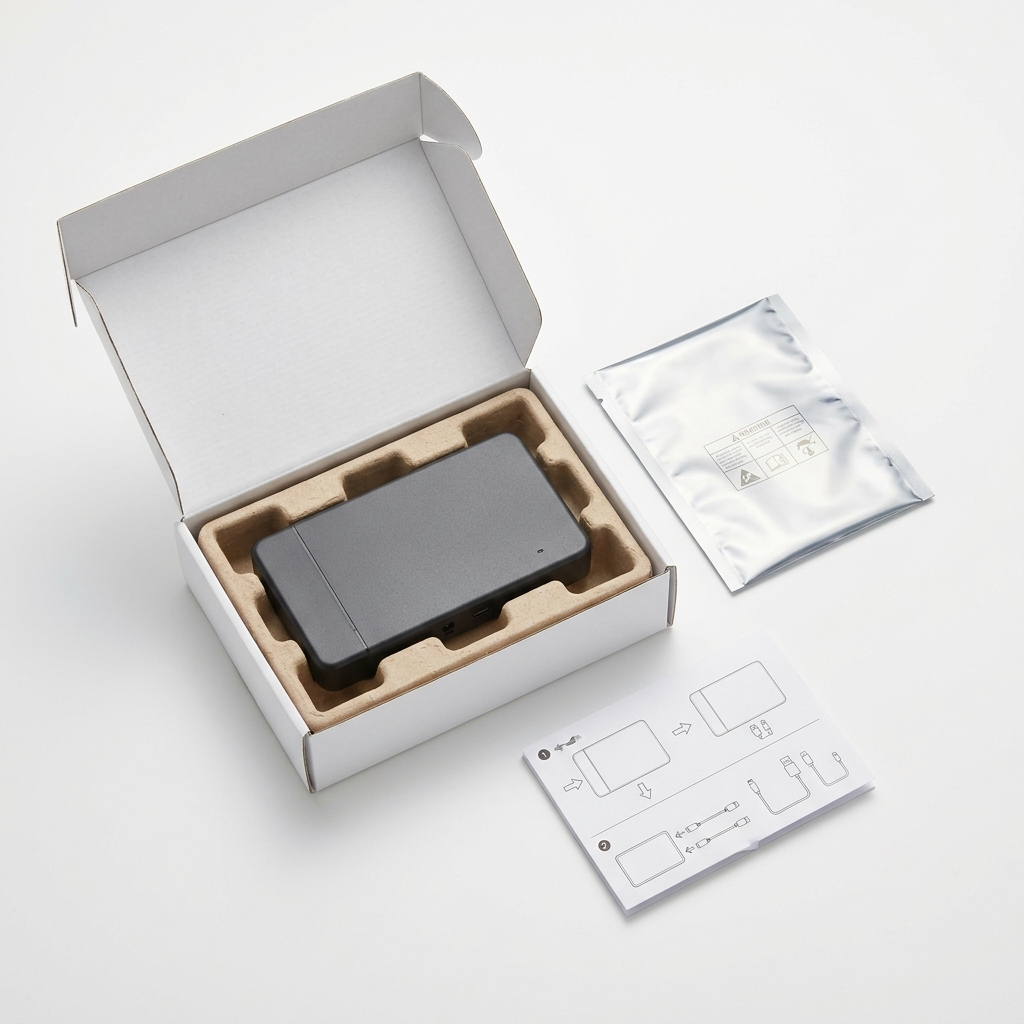
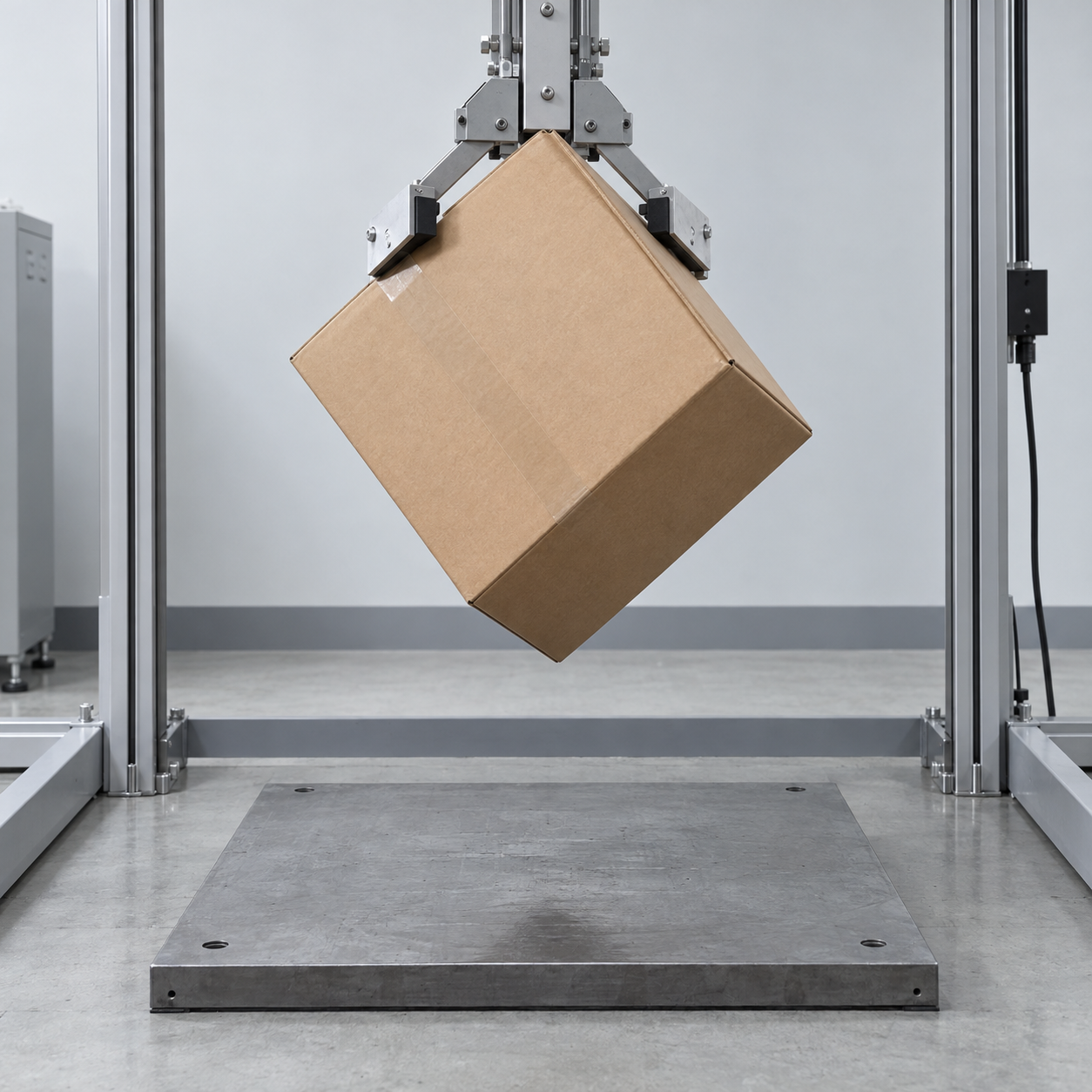
Two halves of the same job: a pack-out that every packer builds the same way, and a test that proves it works.
After launch we keep watching. Damage reports and returns tell us whether the pack is doing its job, and we feed what we learn back into the design. Packing is also where a lot of final checks happen, so we treat it as part of the build, not a job for the end of the line.
Questions we ask a packaging supplier
We ask the same questions of every packaging supplier, and we ask them before samples are made. Protection comes first, but the same answers also tell us whether any sustainability claim will hold up.
| Why we ask | A good answer shows | |
|---|---|---|
| What damage rate do you design to, and how was it tested? | Protection is the main job of the pack | Test results to a named transit procedure, on the pack as supplied |
| What is the material, layer by layer? | Every claim and every recycling route depends on it | Board grade, insert material, film and bag types, each listed |
| What share is recycled content, and how is it checked? | "Recycled" on its own means very little | A percentage by weight, backed by certificates or chain of custody |
| Can it be recycled where our product lands? | Recyclable in theory is not recyclable in practice | Which parts go in household collection in each main market |
| Can we drop a material? | Mixed materials are hard to separate and recycle | A mono-material option, or parts that separate by hand |
| What does it cost at our volumes? | Unit price moves with volume and insert tooling | Prices at two or three volumes, with insert tooling shown separately |
| What happens when the product changes? | Pack and product have to stay in step | Revision control on pack drawings and the pack-out spec |
Sustainability claims that stand up
We like recycled and recyclable packaging. For a lot of hardware, a well-designed board and moulded pulp pack can replace much of the foam and plastic film. What we will not do is put a vague claim on a box. "Eco-friendly", "green" or "sustainable" on its own says nothing anyone can check, and that is where greenwashing starts.
In the UK, the Competition and Markets Authority's Green Claims Code sets out the standard. A claim has to be truthful, clear and backed by evidence, and it must not leave out information that would change the picture. A claim that only covers the outer carton should not read as if it covers the whole pack. "Recyclable" should be true where your customers actually live, not just somewhere in theory.
Plastic deserves a separate look. UK Plastic Packaging Tax applies to plastic packaging with less than 30% recycled plastic content, for businesses above the volume threshold, so the recycled share is now a cost line as well as a claim. Rules differ by market and change over time, so we check the current position for each market before the pack is finalised.
- The exact material of each part of the pack
- The recycled share, by weight, with evidence
- Which parts are recyclable, and where
- Whether the claim covers the whole pack or one part
- Disposal instructions a customer can follow
- Evidence on file before the box is printed
Getting the pack right first time
Our view is simple. Protect the product first, then make the pack as light, simple and recyclable as that allows, and only claim what you can show. Bring packaging into the programme early, alongside tooling, because insert tools, print proofs and transit tests all take time, and a late pack can hold up a launch as surely as a late tool. We set out what that kind of slip really costs in the real cost of a three-month production delay.