Once you know a part should be metal, the next decision is the alloy, and the alloy brings its own process. For most of the parts we look at, that means magnesium, aluminium or Zamak, the family of zinc alloys. Aluminium and Zamak are high-pressure die cast. Our magnesium route is different: semi-solid injection moulding, often called thixomoulding, which works much like plastic injection moulding. The three behave very differently in the finished product.
We choose the alloy the same way we choose any material: what the part has to do first, then the alloy, then the process detail. If you are still deciding between machining, casting and moulding, start with our guide to choosing between CNC machining, die casting and injection moulding.
We are publishing the rest of this post on 30 November. Until then, these posts are ready to read now:
- The Real Cost of a Three-Month Production Delay
- Stop Selecting Injection Moulding Polymers Based on Piece Price Alone
- Where Is the Next Generation of Tool Designers Coming From?
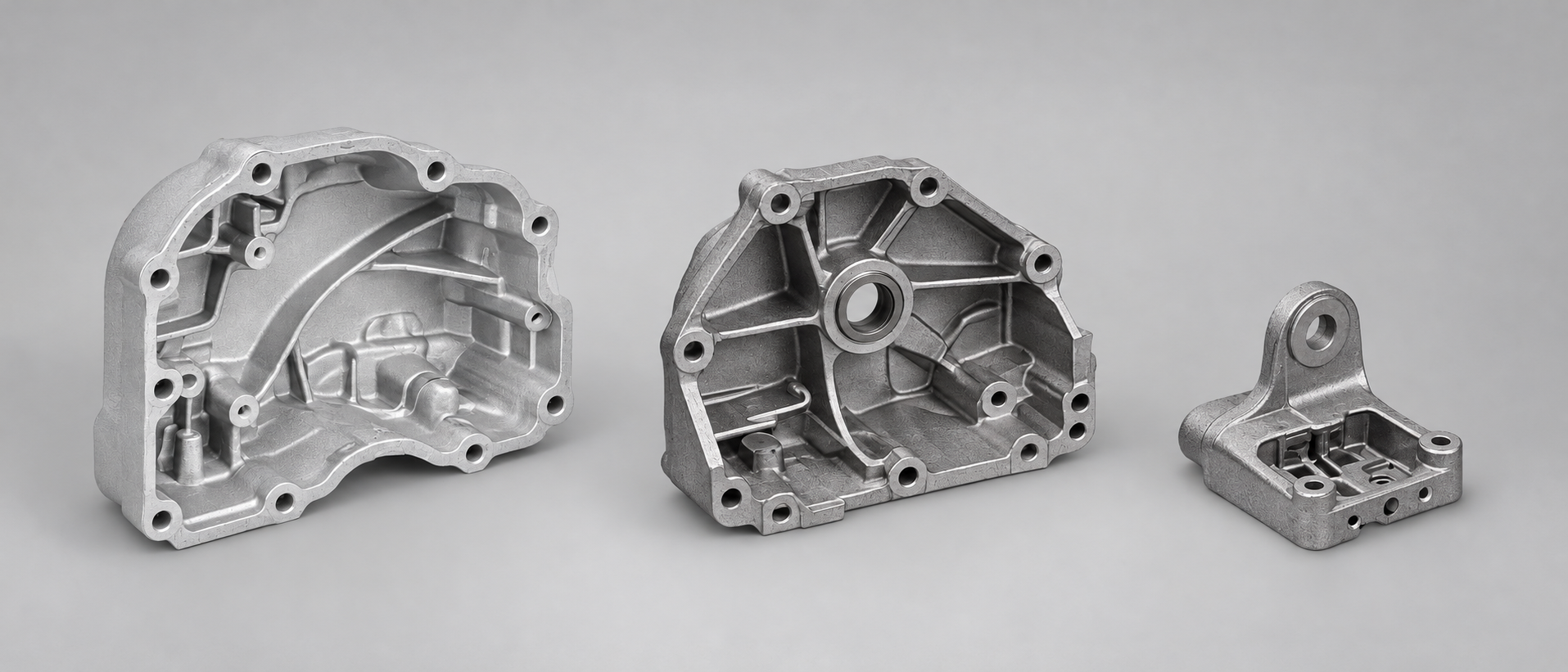
Aluminium and Zamak are die cast. Magnesium is semi-solid injection moulded. Each suits a different kind of part.
Two processes, three alloys
Aluminium and Zamak are die cast. The metal is fully melted, then forced into a hardened steel die under high pressure. Zamak runs in hot-chamber machines at a low temperature; aluminium casts much hotter, in cold-chamber machines.
Magnesium takes a route between die casting and plastic injection moulding. In semi-solid injection moulding the alloy is heated to a thick slurry, part solid and part liquid, rather than fully melted, then injected into the mould much as a plastic would be. There is no ladle and no open melt to manage, and it needs no melting furnace, so it typically uses less energy. Material yield is also high: die casting typically turns around half of the metal it uses into finished parts, with the rest going to runners and overflow to be remelted, while semi-solid moulding typically reaches 75 to 90 percent. The lower temperature also means less thermal shock on the tool. If you already have an aluminium die casting tool, whether it can be adapted for magnesium is worth asking about.
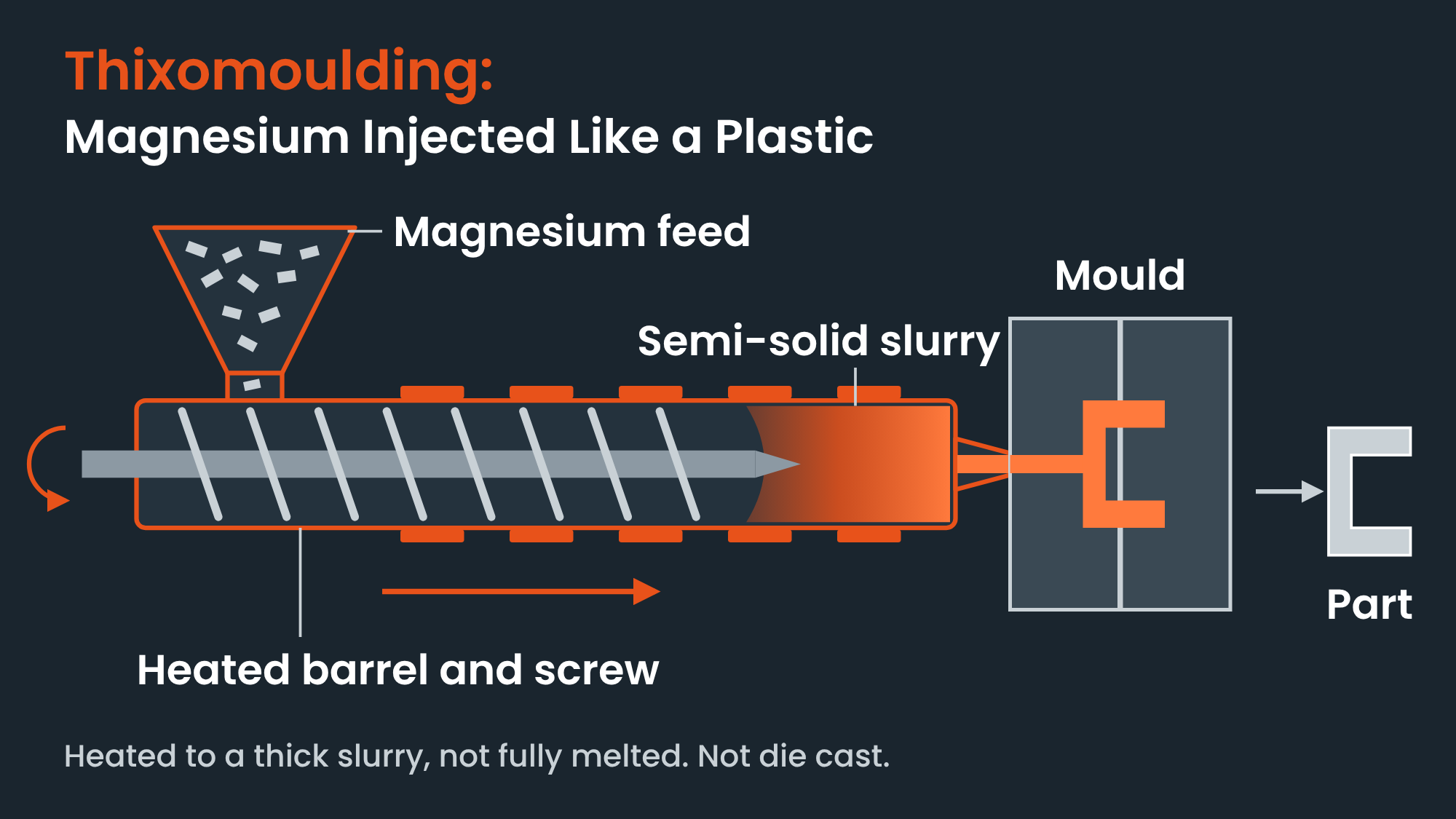
Magnesium is heated to a thick slurry and injected into a mould, much as a plastic would be. It is not die cast.
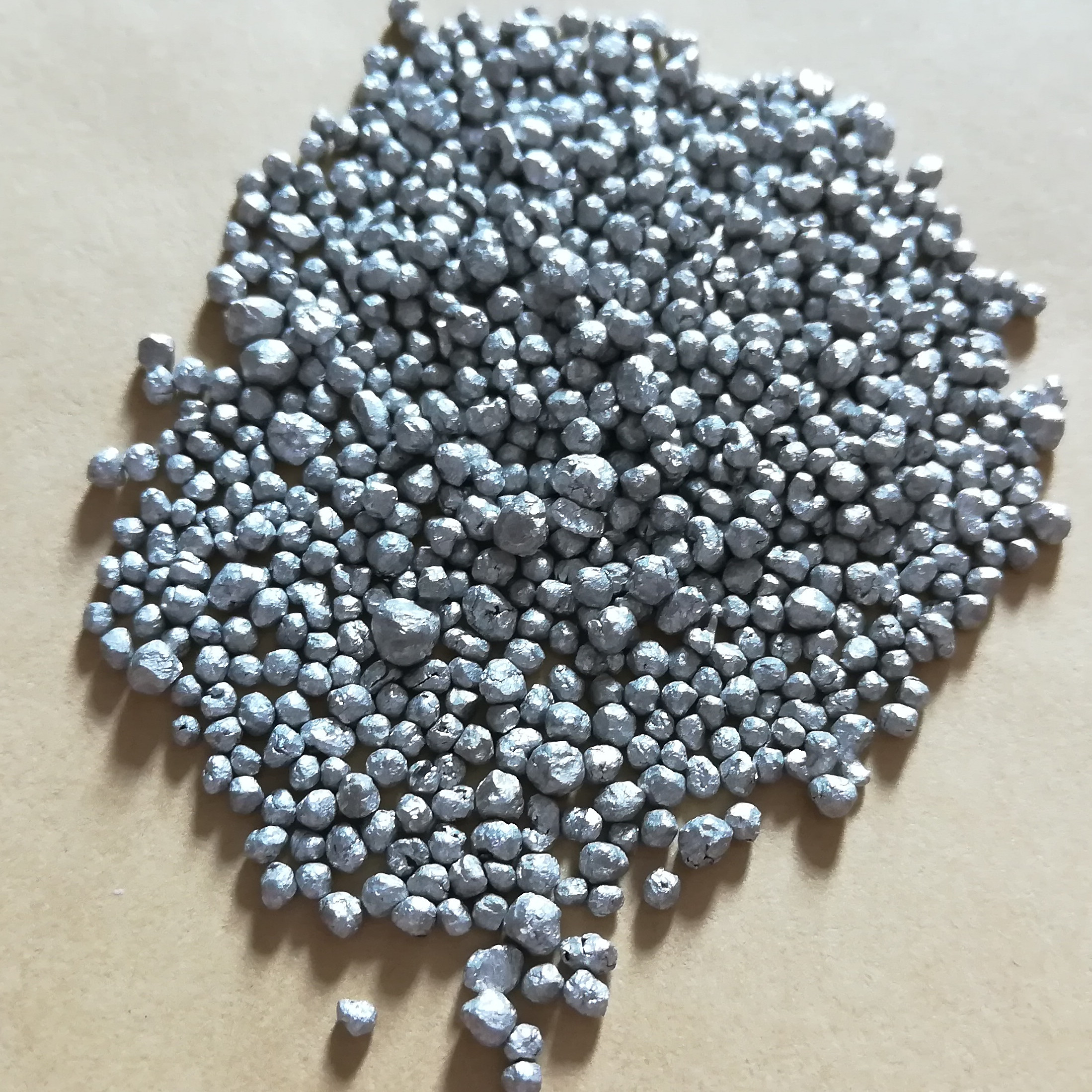
Magnesium granules. Thixomoulding feedstock looks much like this: small solid pieces of alloy, usually chips, fed into the barrel the way plastic pellets are.
Weight, strength and stiffness
Weight is usually the first thing that separates them. Typical densities are about 1.74 to 1.85 g/cm3 for magnesium alloys, about 2.68 to 2.82 for ADC12 aluminium and about 6.6 to 6.7 for Zamak. Make the same part in each, and the magnesium one is roughly 30% lighter than the aluminium one, while the Zamak one weighs roughly two and a half times as much. Part examples from our magnesium supplier, compared with the same parts in ADC12, came out about 30% lighter.
Indicative only. Weights come from typical densities (magnesium about 1.74 to 1.85 g/cm3, ADC12 aluminium about 2.68 to 2.82, Zamak about 6.6 to 6.7). The dots are our relative view of common grades, die cast for aluminium and Zamak and semi-solid moulded for magnesium, not test data; your grade, design and finish move them.
Strength to weight favours the light alloys. Magnesium and aluminium both give a lot of strength per gram, which is why they suit moving parts on a robot, where every gram at the end of an arm costs motor torque and battery life. Zamak is strong for its size but heavy, so it suits small parts where mass does not matter, or where a bit of heft feels like quality.
Stiffness is where magnesium gives something back. It is less stiff than aluminium, so a magnesium part often needs deeper ribs or slightly thicker sections to match the same deflection. We check deflection on the real geometry rather than assume the weight saving carries straight through.
Zamak has its own catch: it can slowly deform (creep) under constant load, more so when warm. We keep it away from parts that carry a constant load next to a motor or another heat source.
Corrosion, heat and finish
Aluminium is the all-rounder. With a powder coat or paint it handles most indoor and many outdoor environments, and it is the usual choice when a housing also has to move heat away from a motor, a processor or a power stage. One detail we flag early: the high-silicon alloys used for die casting do not anodise well, so we plan paint or powder coat instead.
Magnesium needs more care. It is the most reactive of the three, so we plan a conversion coating and paint system from the start, and we isolate it from steel fasteners and other metals to avoid galvanic corrosion. Done properly, it works well in handheld and portable products. Machining it also needs care with fine chips and dust, because fine magnesium swarf can ignite if it is handled badly.
Zamak conducts heat well and takes plating and decorative finishes better than the other two, which is why it is so common on visible hardware such as knobs, hinges and buckles. Indoors it holds up well. Outdoors we would plate or coat it.
| Magnesium (e.g. AZ91D) | Aluminium (e.g. ADC12, A380) | Zamak 3 or 5 (zinc) | |
|---|---|---|---|
| Process | Semi-solid injection moulding (thixomoulding) | High-pressure die casting, cold chamber | High-pressure die casting, hot chamber |
| Typical density | About 1.74 to 1.85 g/cm3 | About 2.68 to 2.82 g/cm3 (ADC12) | About 6.6 to 6.7 g/cm3 |
| Same part weighs | Lightest, roughly 30% lighter than aluminium | Baseline | Heaviest, about two and a half times aluminium |
| Strength to weight | High | High | Low, because of its weight |
| Stiffness | Lowest of the three, so expect extra ribs | Good | Good, but creeps under constant load, especially when warm |
| Corrosion | Needs a conversion coat and paint; isolate from steel fasteners | Good, better with a coating | Good indoors; plate or coat outdoors |
| Heat transfer | Moderate | Good; the usual choice for heatsinking housings | Good, but heavy for the job |
| Walls and detail | Thin walls, flows well | Thin walls, usually a little thicker than zinc | Thinnest walls and finest detail; often little or no machining |
| Tool life | Typically 200,000 to 300,000 shots; confirm with the moulder | Typically 100,000 to 150,000 shots; highest casting temperature | Longest; low melting point, hot-chamber machines |
| Finishing | Conversion coat, paint, powder coat | Powder coat, paint, e-coat; high-silicon grades anodise poorly | Plating such as nickel or chrome, paint, powder coat |
| Where it fits | Lightweight robot links, handheld frames, portable housings | Motor and gearbox housings, heatsinking enclosures, edge AI enclosures, structural brackets | Hinges, latches, knobs, small mechanisms, connector bodies, parts that should feel weighty |
Cost: per part, not per kilo
Comparing price per kilo misleads. Zamak can look reasonable per kilo, but you are buying about two and a half times the mass of an aluminium part. Magnesium pricing per kilo varies by supplier and market, and it can be cost-competitive with aluminium depending on the part, because you buy about a third less of it by weight. What decides the price is the cost per finished part: material by weight, cycle time, tool life, machining after casting or moulding and the finish.
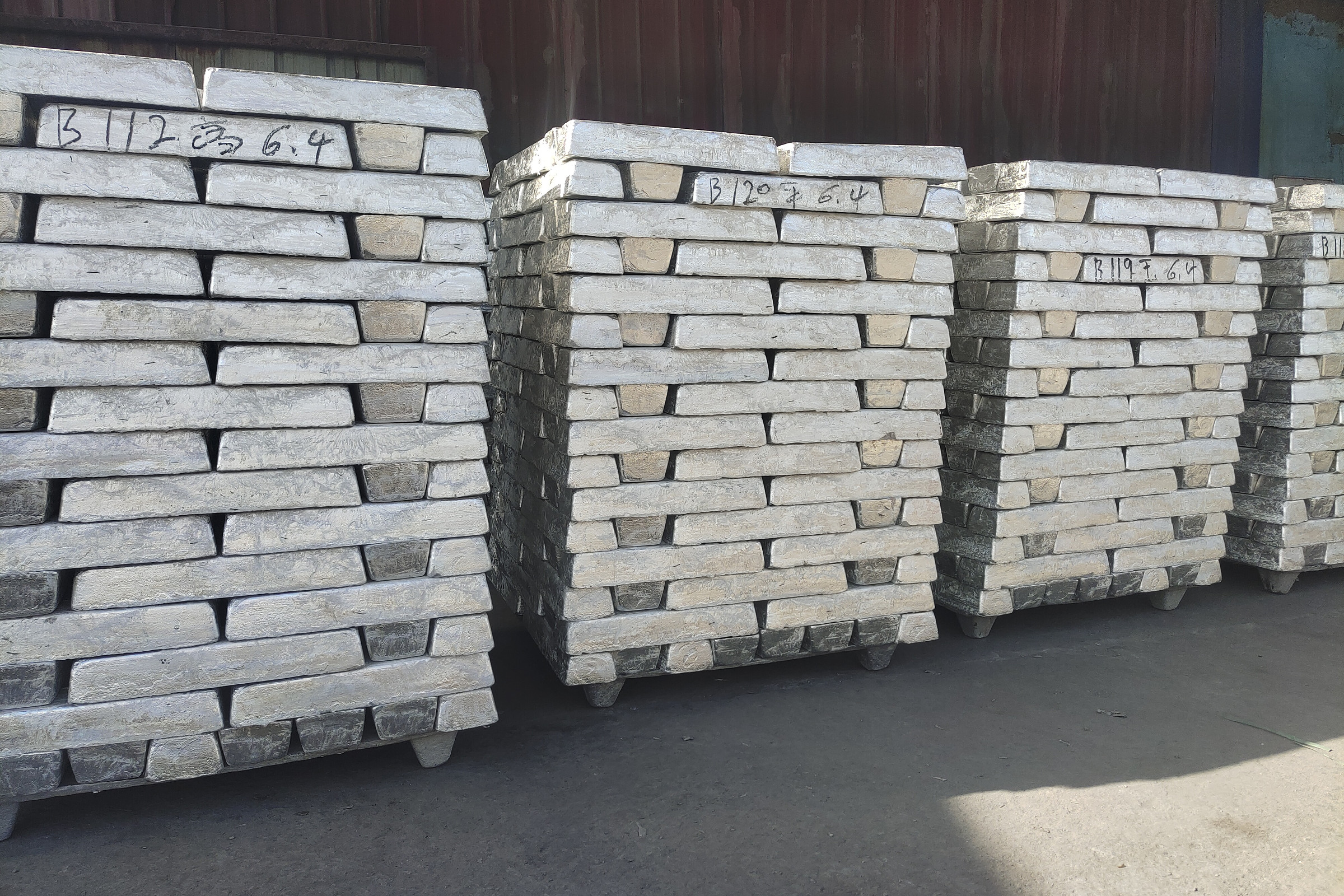
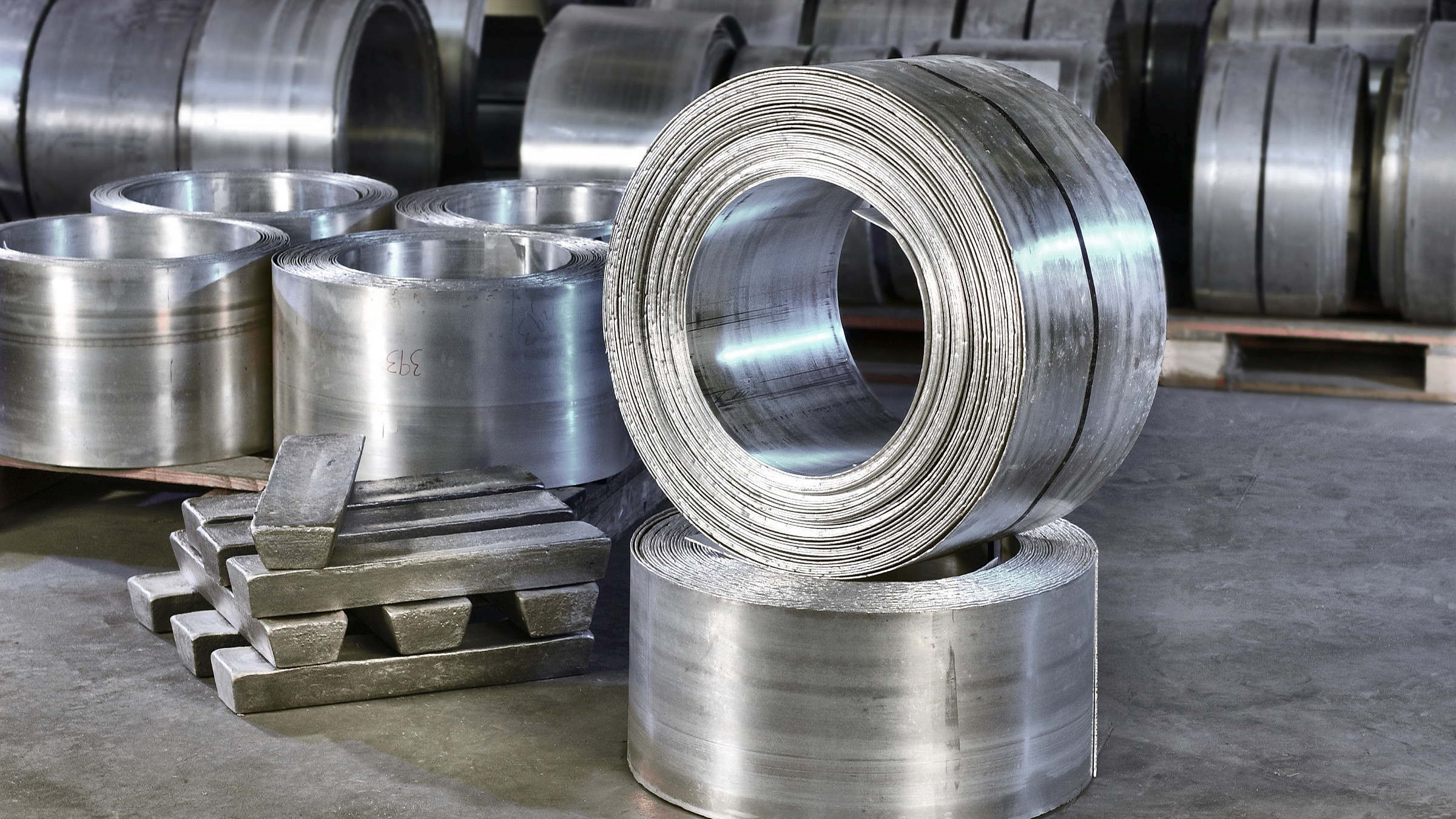
Magnesium alloy ingots on pallets, bought by weight. What matters is the cost of each finished part, not the price of the metal per kilo.
That is why Zamak often wins on small, detailed parts. It casts at a low temperature in a hot-chamber machine, cycles quickly, gives long die life and often needs little or no machining. On larger parts the weight catches up with it, and aluminium usually takes over. Magnesium earns its place when the weight saving is worth planning for, typically on parts that move or on products people carry.
Where the choice is close, we ask for quotes in two alloys, with the finish included. The gap is rarely what the material price alone suggests.
Making the call
We work through two questions, in order, and most parts land quickly.
Our starting point for alloy and process choice. It narrows the field; quotes in two alloys settle the close calls.
- Aluminium is the default. Move away from it only for a clear reason.
- Choose magnesium when weight really matters, and plan the coating and fasteners from day one.
- Choose Zamak for small, detailed or plated parts, and keep it away from constant loads near heat.
- Compare cost per finished part, never price per kilo.
- Quote close calls in two alloys, with the finish included.
Our advice: start from the job the part does, let weight, heat and finish choose the alloy, then confirm the volume and the process: die casting for aluminium and Zamak, semi-solid injection moulding for magnesium. Aluminium is the right default for most housings and structure. Move to magnesium when weight really matters and the coating is planned, and to Zamak when the part is small, detailed or needs a plated finish.