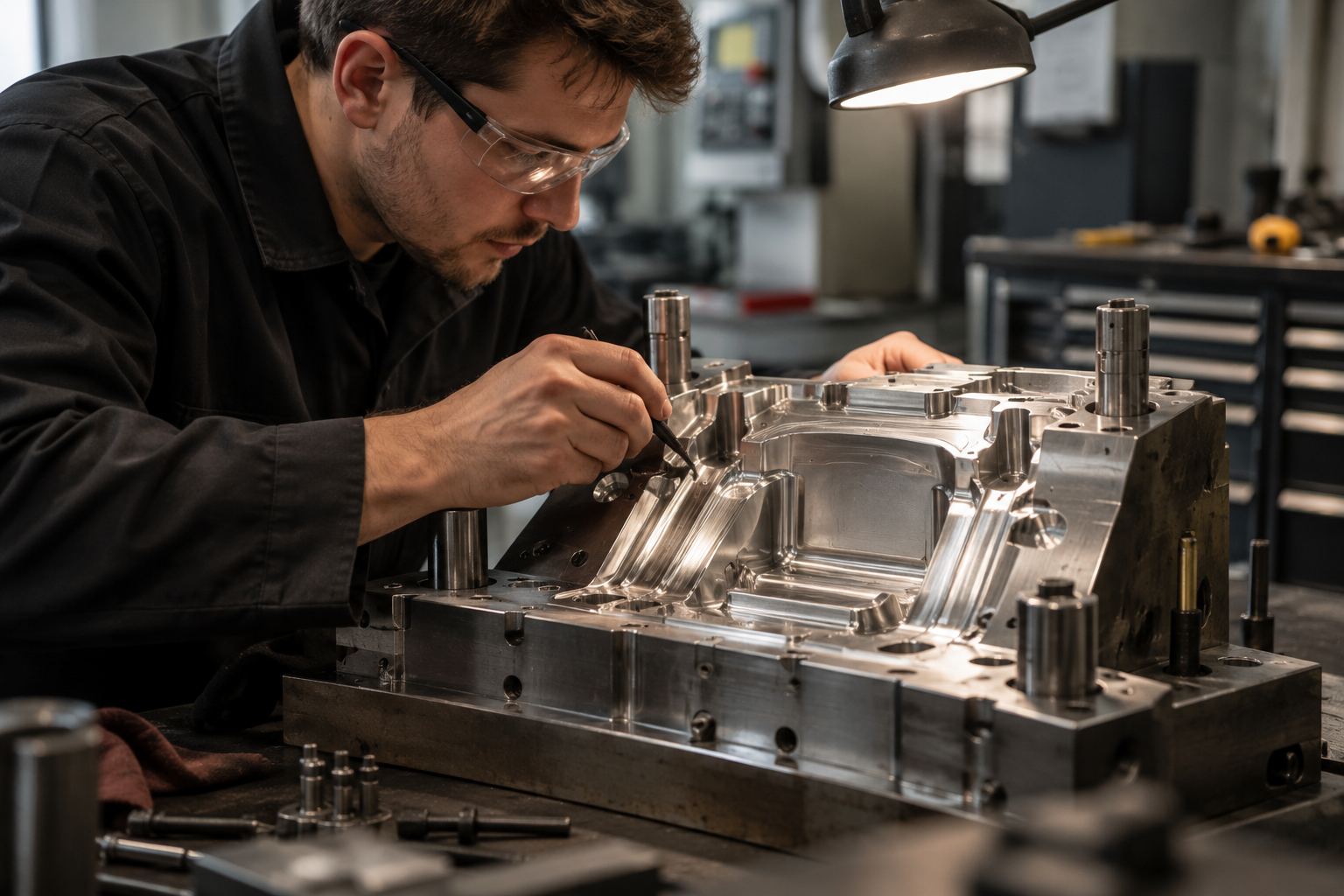
Ask a tooling shop how long it takes to find a strong tool designer and you will usually get a pause, then a story. Not a shortage of people who can open CAD. A shortage of people who can look at a part, a gate, a steel choice and a cycle time, and feel where the risk sits before steel is cut.
That gap matters more now than it did twenty years ago. Products are more complex. Tolerances are tighter. Launch windows are shorter. And a growing share of the industry has been trained to trust the simulation pack as if it were the tool itself.
Simulation is useful. Mould-flow and structural analysis catch many problems early. They do not replace the person who has seen a dozen similar tools fail in similar ways, and who knows which warning on the screen is noise and which one will scrap a weekend of sampling.
The skills gap is not just headcount
In the UK, Europe and the US, the conversation often starts with retirement and recruitment. Older toolmakers and designers leave. Fewer people come through apprenticeships and toolroom routes. Universities turn out design engineers who can model a product, but who have never stood next to a press while a tool is dialled in.
The deeper loss is process intuition.
Process intuition is knowing that a thin rib in glass-filled nylon will fight you on warpage even when the fill looks clean. It is knowing when a hot runner will save the programme and when it will hide a balance problem until T1. It is knowing that a cheap tool steel will cost you in polishing time, wear and dimensional drift long before the piece price looks wrong.
You cannot download that. You build it by working through bad tools, good tools, and the messy ones in between.
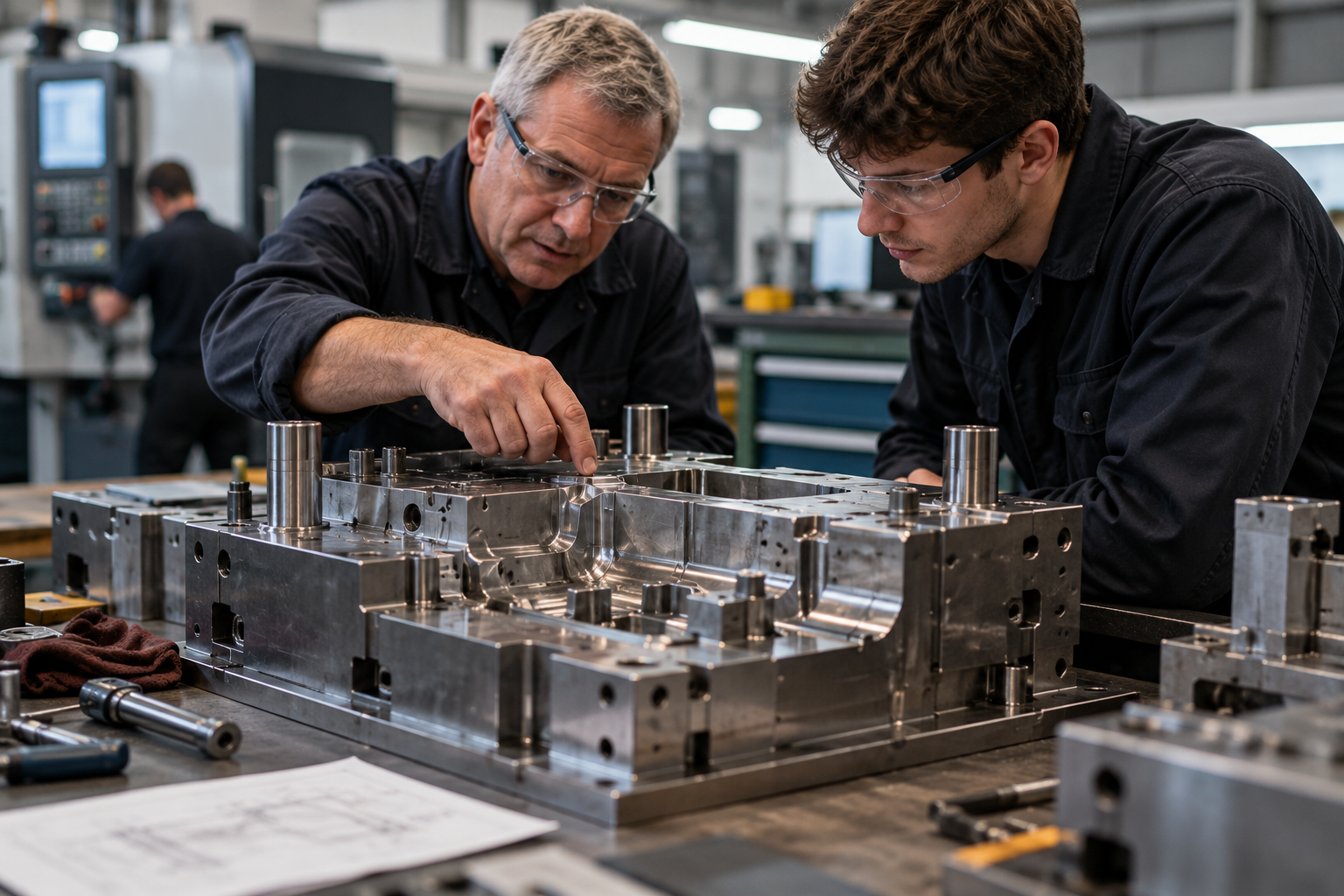
The next generation learns process intuition beside people who have already paid for the mistakes.
Why product teams feel this late
Most hardware teams meet the shortage at the worst moment: when the design is done, the BOM is locked, and the first tool trial is booked.
Then the questions arrive. Can this wall thickness pack at that length of flow? Will this living hinge survive the resin you actually bought, not the one on the data sheet? Is the parting line where service and assembly can live with it?
If the only person who can answer those questions is already booked for the next six months, your programme slips. Or you push ahead with a tool that was never quite right, and you spend the launch fixing what should have been designed out.
That is not a soft cultural problem. It is schedule, scrap, rework and brand risk.
Simulation without judgement is a false comfort
We use simulation. So do our suppliers. The mistake is treating a green fill plot as a green light for production.
A simulation is only as good as the assumptions under it: gate locations, process window, material grade, insert behaviour, cooling layout. Change one of those in the real toolroom and the plot and the part diverge.
Experienced tool designers use simulation as a sparring partner. They challenge it. They ask what happens if the process sits at the edge of the window. Less experienced teams sometimes treat it as a certificate. That is how you get a tool that should have worked and a launch that does not.
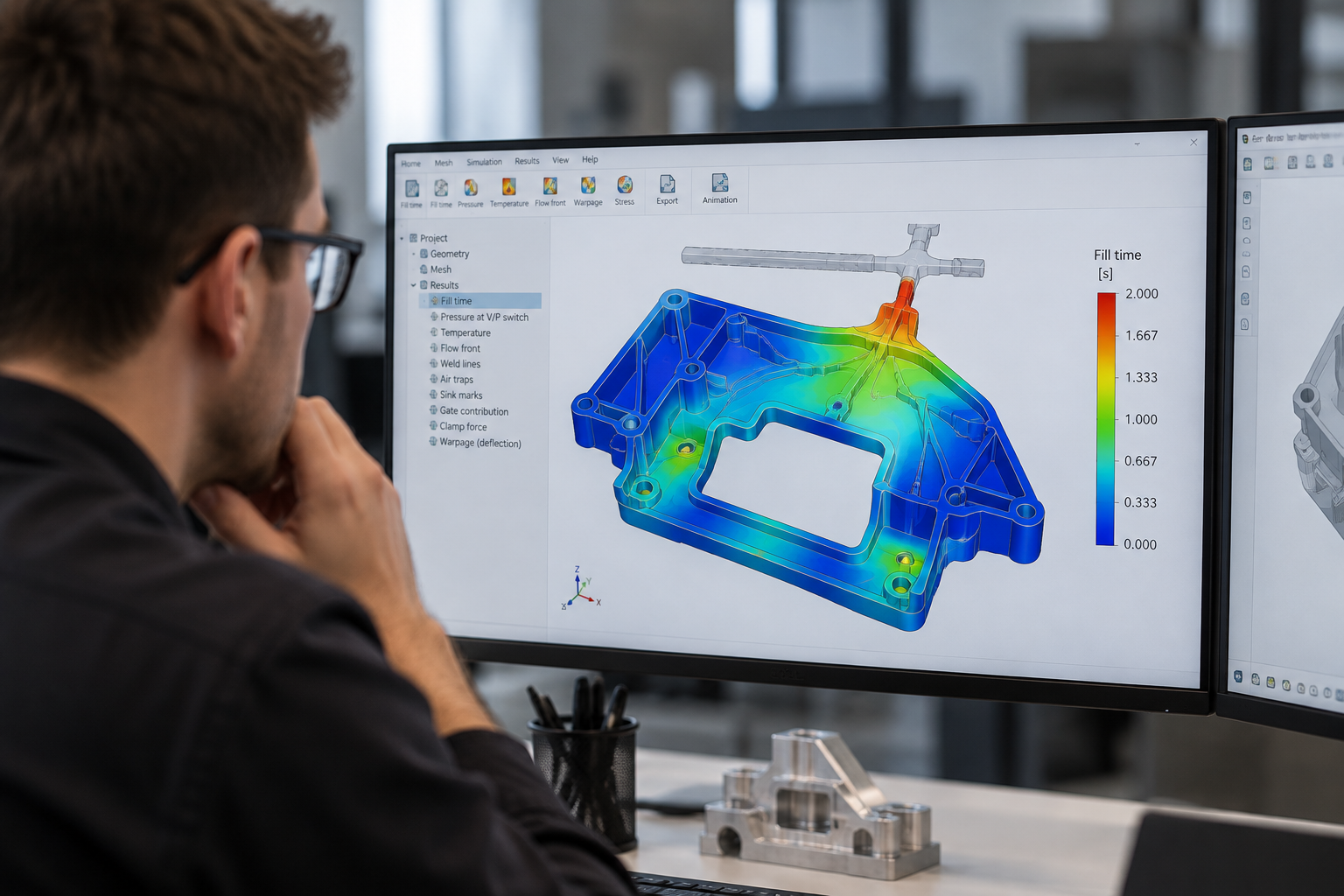
Simulation helps. It does not replace press-side judgement.
What good teams do while the pipeline rebuilds
You cannot conjure a new generation of tool designers overnight. You can stop making the shortage worse inside your own programmes.
Bring manufacturing into the design earlier> Not as a late DFM checklist. As a real conversation on gates, shut-offs, steel, cooling and inspection before the CAD is frozen.
Keep a living record of what failed. Tooling lessons disappear when they live only in one person's head. Capture warp causes, gate changes, steel swaps and sampling notes so the next designer is not starting from zero.
Pair juniors with messy tools, not only clean ones. The education is in the tools that needed three sampling loops, not the brochure shot of a perfect first-off.
Choose partners who still have grey hair in the room. Contract manufacturers and tooling houses that can still field designers with decades of press-side judgement are not a luxury. They are risk cover while the wider pipeline catches up.
Do not confuse low piece price with low programme cost. A tool designed by someone who has never fought a difficult polymer will look cheap until T1. Then the programme cost is not.
The question underneath the headline
Where is the next generation coming from? is really two questions.
Where will the people come from? Apprenticeships, toolrooms, hybrid design-to-manufacture roles, and companies willing to train slower than the quarterly plan prefers.
And what will they need to know that software will not hand them? Material behaviour under real process windows. How steel, cooling and maintenance interact over a tool's life. How to argue with a simulation. How to protect a launch when the first samples are almost right, but not right enough.
Until that pipeline is healthier, product and operations leaders should plan as if experienced tool design capacity is scarce, because it is. Build schedules, supplier choices and design reviews around that fact, not around the hope that a perfect CAD model will somehow invent the judgement that used to sit on the shop floor.